Replacement Windows in Stanford
Every replacement window we install in your Stanford home is built to order from the measurements our team records at the consultation, which means the measure defines the finished product…
Stanford New & Replacement Windows Installation
We Install Replacement Windows that are Energy Star® Rated, Energy-Efficient Windows and Custom Fit for Your Home! Add comfort, improve your home's value and save on heating and cooling costs.


Tap images to enlarge
See More Recent Projects →California contractor's license #989637, 4.9/5 across 921+ GuildQuality and Google reviews, NARI member, A+ BBB rating.
See the Difference: Recent Window Work Near Stanford
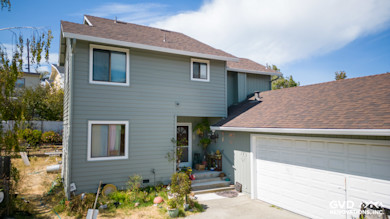
Genuine before-and-after results from recent GVD window projects near Stanford.


Key Takeaways
- Material, glass package, and the condition of the existing frame drive the final number more than the size of the glass does.
- Most window replacements need a permit, though the exact requirement depends on whether the new unit changes the rough opening, egress path, or structural header.
- Replacement windows are built to order from the measurements taken at the consultation, so a tape-measure reading off by a quarter inch becomes a remake rather than an adjustment.
- Late fall and winter are typically the cheapest months to schedule, once the peak spring and summer season has cleared installers' calendars.
- Window replacement is priced per window installed, not per square foot, because labor, flashing, and disposal cost roughly the same on a 24 inch opening as a 60 inch one.
Window replacement in Stanford, CA: what makes this market its own case
Window replacement in Stanford means removing existing window units, vinyl, wood, or aluminum, and installing new insulated units sized and flashed for each opening, delivered and installed by a licensed contractor working under Santa Clara County's building code. It covers everything from a single failed dual-pane unit in a kitchen to a full 22-window install on a two-story.
Every replacement window we install in your Stanford home is built to order from the measurements our team records at the consultation, which means the measure defines the finished product before manufacturing begins. A frame ordered a fraction too small or too large cannot be corrected on site, so we record each opening individually rather than applying one figure across the house. That single visit determines whether your units arrive fitting the openings they were made for.
The measure is the job on a window project, and we do not delegate it. A GVD project manager takes the measurements that go into your manufacturing order and owns the result.
We're an Anlin Certified and Authorized Dealer and an Andersen Certified Contractor, which means the frame and glass package options we quote in Stanford come with manufacturer-backed warranties, not a generic aftermarket unit. Call (916) 269-0761 to book a free in-home consultation.
How much window replacement costs in Stanford
A firm total for a fully defined scope is the only figure worth comparing between companies, because a number attached to a vague scope can move once the work starts. We give you the full scope and one fixed price in a detailed digital proposal, so the quote you weigh against another company covers the same defined work.
Window replacement in Stanford is priced per window installed, not per square foot of glass, because labor, flashing, and disposal cost roughly the same whether the opening is 24 inches or 60 inches wide.
A few windows, 3 to 5 openings, $4,000 to $12,000. Standard vinyl units with dual-pane Low-E glass, installed as retrofit inserts or full-frame depending on the condition of each opening. Standard vinyl runs $900 to $1,500 per window at this scale.
Partial house, 10 to 12 openings, $12,000 to $22,000. Enough openings to do a full elevation or the main living areas in one mobilization. Frame material and glass package are still open at this scale, and the per-opening price improves over a small job.
Whole house, 20 to 25 openings, $22,000 to $45,000. Every opening replaced in one project, which gives the most consistent result and a single mobilization. Includes the exterior repair where each opening is disturbed.
Premium whole house, $45,000 to $78,000. WUI fire-rated glass, black or specialty frames, and specialty shapes. Fiberglass and premium units run $1,500 to $2,500 per window, and bay, bow, and arched units add $1,000 to $3,500 each.
For a full home, the arithmetic is straightforward: multiply the per-window price by the count and add any frame repair. Bay windows, sliders, and custom shapes push that up. For the full pricing breakdown by scope, see our main window replacement page.
Glass-only repair, replacing a failed insulated glass unit without touching the frame, costs less than a full unit swap because the frame, weep holes, and exterior trim stay untouched. That is the right call when the glass has failed but the frame is still square and sound, and the wrong call when the frame itself is warped, rotted, or no longer holding its geometry.
Vinyl, fiberglass, and the glass package
Frame choice and glass package both matter more than most homeowners expect, because they solve different problems: the frame governs how long the seal survives, the glass governs what the room actually feels like.
Vinyl and fiberglass both outperform aluminum because aluminum conducts heat directly into the room and expands and contracts more with each thermal cycle, loosening seals faster over a 15 to 20 year service life.
Vinyl vs fiberglass frames
| Frame material | Expected lifespan | Heat and UV performance |
|---|---|---|
| Vinyl | 20 to 30 years | Good; can soften slightly at extreme south and west exposure |
| Fiberglass | 30 to 40 years | Excellent; matches glass expansion rate, resists warping |
| Aluminum (for comparison) | 15 to 20 years | Poor; conducts heat, sweats in cold snaps |
Fiberglass costs more upfront but expands and contracts at nearly the same rate as glass, which keeps seals intact longer under a daily thermal swing. Vinyl remains the more common choice for homeowners prioritizing upfront cost over that seal-life advantage.
Low-E glass and what the coating actually does
There is more than one Low-E coating, and the right one depends on the exposure of the specific room. We check orientation per opening rather than specifying one coating for the whole house.
Double-pane vs triple-pane windows
Triple-pane glass adds a third lite and a second gas-filled gap, which lowers heat transfer further than dual-pane but at added cost, weight, and frame stress that doesn't pay off in every application.
| Factor | Double-pane (Low-E, argon) | Triple-pane (Low-E, argon or krypton) |
|---|---|---|
| U-factor (lower is better) | 0.27 to 0.30 | 0.20 to 0.25 |
| Weight per window | Standard | 30 to 50% heavier |
| Frame strain over time | Low | Higher; needs reinforced frame |
| Best fit | Most homes | North-facing rooms, home offices, street-noise buffering |
Triple-pane is not an upgrade you apply to a whole house by default. The weight needs a frame specified for it, and the energy payback usually outlasts the ownership period. Applied room by room where noise or a cold northern exposure is the real problem, it is worth it.
Do you need a permit to replace windows in Stanford?
Whether a permit applies comes down to scope. A like-for-like swap into an unchanged opening is treated differently from work that resizes an opening, alters a header, or creates an egress window. We confirm what applies to your address with Santa Clara County before the job starts, and handle the filing when one is needed.
Installing windows without a required permit creates a real problem at resale: an unpermitted opening can surface during a buyer's inspection or an appraisal, which can delay closing or force retroactive permitting, sometimes with fees added for the missed inspection. It also means no inspector verified the flashing and weatherproofing.
A like-for-like window replacement generally moves through Santa Clara County faster than a structural change, since the same-opening-size case doesn't trigger a full plan review.
How long window replacement takes in Stanford
Plan for 2 to 3 working days on a full 20-window home, plus the measure visit beforehand and the manufacturing lead time in between. The install itself is rarely the constraint.
A small job, five windows or fewer, can often finish in one day start to finish. A full-home replacement rarely does, because manufacturing lead time for made-to-order units runs well before installation day even starts.
Phasing your Stanford window replacement: all at once or a few at a time
If you phase, phase by exposure rather than by room. The west and south elevations carry the heat load and the UV, so replacing those first puts the money where the discomfort is.
Installer calendars tend to open up once the peak spring and summer season ends, so late fall and winter often offer more scheduling flexibility. Locking a quote earlier in the year protects against a mid-year manufacturer price increase.
How we measure and quote your Stanford windows
A window quote is only as good as the measurements behind it. We take them ourselves, opening by opening, and this is what that visit covers.
Replacement windows do need to be built close to exact opening size; a unit that's undersized by more than roughly a quarter inch requires extra shimming and sealant work that can compromise the weatherproofing seal over time. Book the free in-home consultation rather than measuring and ordering sight unseen, since a manufacturing order built off a homeowner's tape-measure reading carries real risk of a costly remake.
Why Stanford homeowners choose GVD Renovations
We work with Santa Clara County plan review and inspection on a regular basis, so we know how submissions are read and what inspectors look for here. When a permit is required for your window replacement, GVD handles the permitting process rather than leaving that coordination to you. A national franchise routes plan review through people who do not work with this jurisdiction, which is where schedules slip. The crew that measures your openings is one of our own in-house teams, accountable for how each unit is set, flashed, and closed back up, from the first measurement through the final walkthrough. You can also see frame materials and glass packages in our showroom before you decide, so the choices behind your quote are ones you have handled in person rather than pictured from a brochure.
GVD Renovations holds California contractor license #989637, carries full liability and workers' compensation insurance, and is the 2025 James Hardie Service Excellence Award winner, the only California contractor to receive that award that year. We're also an Anlin Certified and Authorized Dealer and an Andersen Certified Contractor, which backs the window products we install in Stanford with manufacturer warranties rather than a generic third-party guarantee.
We have worked through plan review across Santa Clara County and neighboring jurisdictions, so when a permit is required our submittals match what inspectors expect the first time.
Every Stanford project gets a dedicated project manager who coordinates scheduling, communication, and quality checks from the initial measure through final walkthrough, which means one accountable point of contact rather than a different face at each visit, and who handles the permit filing directly with Santa Clara County when a permit applies.
We cover this city as part of our regular service area.
Window Replacements We've Completed Near Stanford
Book a free in-home window consultation in Stanford
Book the free in-home consultation at (916) 269-0761. A GVD project manager comes to your Stanford home, takes the measurements that go into the manufacturing order, and gives you a detailed fixed-price proposal with no obligation to sign that day.
Serviced ZIP Codes: 94305, 94309
Try Our 3D Home Design Visualizer!
Ready to explore the possibilities for your home? Snap a photo to get started or spark your imagination with our sample homes.
Start Designing

We are fully insured with worker's compensation and general liability insurance to safeguard you and your home during our work.


GAF Certified Roofing Contractor


2025 James Hardie Service Excellence Award


LP Certified Installer Certificate


Angie's List Super Service Award

VSI Certified Installer

Best of Houzz 2020 Service Award


Financing made simple
- Fast application process
- Flexible payment options
- Check eligibility in minutes
Financing is offered through third-party lenders. Approval, rates, and terms depend on credit profile. Not all applicants qualify.

Checking eligibility will not impact your credit score

4.6/5

4.9/5

A+

5/5

5/5

5/5

5/5

4.8/5

5/5
Watch What Some of Our Clients Have to Say
Trusted by Thousands of Homeowners Across Northern California


Replacement Windows Near Stanford
We bring the same crews, materials, and workmanship to every community around Stanford.
Frequently Asked Questions
about Replacement Windows in Stanford
Are there rebates for energy-efficient windows in Stanford?
Rebates on efficient windows exist in much of California but are administered utility by utility, so eligibility and amounts differ between neighboring service areas. Check your provider's current program and its NFRC thresholds before specifying, and we will make sure the units you order carry the ratings the application asks for.
Is there a federal tax credit for replacement windows?
The federal Energy Efficient Home Improvement Credit has historically covered a share of qualifying window costs, but California does not run a separate state income tax credit specifically for window replacement. Check whether the federal credit is still active for your filing year, since energy credit programs are subject to congressional renewal and can lapse or change scope.
Do I need HOA approval to replace my windows?
An HOA can hold approval over how your windows look even though you own the units outright. Submit the product spec sheet for architectural review before the order is signed, not after installation is scheduled.
Is it worth replacing 20-year-old windows?
A 20-year-old window sits at or past the end of a typical dual-pane seal's service life, and once that seal fails, the argon or air fill leaks out and the insulating value drops even if the glass still looks clear. Replacement generally makes sense once you see fogging between panes, visible frame warping, or a noticeable draft. Repair can extend the window a few more years only if the frame itself is sound and the failure is limited to hardware like a broken balance or lock.