New Flooring That Makes the Whole Home Feel Finished
Flooring installation in Sacramento done with proper subfloor prep, moisture testing, and clean transitions. LVP, hardwood, tile, and laminate, installed to last.
Flooring Installation in Sacramento
Most flooring problems aren't flooring problems. They're subfloor problems, moisture problems, or transition problems that show up six months after install. The product on the floor gets blamed, but the actual failure happened before the first plank went down.
We're a Sacramento flooring installer that treats prep, moisture management, and substrate work as the actual job. The product on top is the visible result of doing that work right.
Flooring Materials
The right floor depends on where it's going, how much moisture and traffic it will see, and how long you plan to live with it:
Luxury Vinyl Plank (LVP)
The most-installed flooring in Sacramento homes. Rigid-core LVP is waterproof, scratch-resistant, dimensionally stable through humidity swings, and visually convincing as wood. Modern 20-mil+ wear layers handle kids and pets without showing it.
Engineered Hardwood
Real hardwood veneer over a stable plywood core. Handles humidity changes better than solid hardwood and works over concrete slabs where solid hardwood can't. Refinishable once or twice. Visually identical to solid hardwood once installed.
Solid Hardwood
Three-quarter-inch solid planks in oak, hickory, maple, or walnut. The most refinishes (typically 4 to 6 times over a 50-plus year lifespan). Requires plywood subfloor and longer acclimation. The right call for long-term homes with stable conditions.
Porcelain & Ceramic Tile
The most durable and water-resistant flooring we install. Porcelain outperforms ceramic in wet areas. Large-format tile (24x48 and larger) creates a modern, low-grout look. Labor intensity drives the cost: proper layout and lippage control are skilled craft.
Laminate
Lower price than LVP with similar visual realism, but lower moisture tolerance. For most homes, LVP delivers similar looks with better water performance for a small premium. Laminate still makes sense in dry rooms when budget is the deciding factor.
The Part Nobody Sees: Subfloor Prep
Every flooring failure traces back to one of two things: the subfloor it was installed over, or the moisture conditions when it was installed. Proper prep adds days to a project. Skipping it saves a day and costs you the floor 12 months later.
The old floor comes up, exposing whatever's been hiding underneath: water damage near a dishwasher, rotted subfloor near a leaking shower, asbestos vinyl in older homes (handled appropriately), or unexpected substrate transitions.
Concrete slabs and wood subfloors both hold moisture. We test with calibrated meters before installation. If readings are outside spec for the product, we wait or address the source. This is where most installs cut corners.
Most products specify flatness within 3/16 inch in 10 feet. Older Sacramento homes routinely exceed that. We use self-leveling underlayment or sand high spots before any product goes down.
Slab installs require a vapor retarder to prevent ground moisture from reaching the floor. Underlayment choice depends on product. Wrong underlayment voids most product warranties.
Wood and engineered products need 48 to 72 hours indoors before installation. Installing before the product stabilizes causes gaps, buckling, or end-joint separation later.
Installation Methods
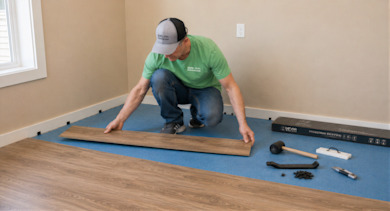
LVP and laminate usually float with click-lock joints, which is fast and forgiving on minor subfloor imperfections. Engineered hardwood over concrete typically glues down. Solid hardwood nail-downs over plywood subfloor. Tile gets bedded in thinset over backer board or uncoupling membrane. The method affects how the floor feels, how it sounds, and how long it lasts: we match it to the product and substrate, not the other way around.
Installed Flooring Costs in Sacramento
What you should expect to pay for installed flooring in 2026, including material, labor, subfloor prep, baseboards, transitions, and disposal:
A standard LVP install on 1,500 square feet lands in the $7,000 to $12,000 range. Tile installs of similar size run $15,000 to $25,000 depending on tile size and layout.
What Separates a Good Install From a Bad One
We take and photograph meter readings on every project. Outside-spec readings mean we wait or address the source. This single step prevents most install failures.
A 10-foot straightedge across the substrate before installation. Spots that exceed flatness tolerance get leveled, not hidden by underlayment.
T-molding, reducers, stair nosing, and thresholds specified and ordered during the quote. Not improvised from leftover material on install day.
We remove and reinstall existing baseboards so the new floor terminates underneath them, or use proper quarter-round in matching finish. We don't leave gaps and hide them with caulk.
Why Homeowners Choose GVD for Flooring
Flooring is often part of a larger remodel, which means timing matters. GVD coordinates flooring with cabinets, baseboards, doors, trim, and paint so the finished space looks clean, not pieced together.
- Subfloor prep and moisture checks before installation
- Flooring coordinated with kitchens, bathrooms, and whole-home remodels
- Clear quote before work begins
- Licensed California contractor, CSLB #989637
Flooring FAQ
How long does a flooring install take?
Single-room installs finish in 1 to 3 working days. Whole-home projects run 4 to 10 days depending on square footage, demo, subfloor prep, and stairs. Your quote includes a real schedule based on the actual scope.
Can I install LVP over my existing tile?
Sometimes, depending on tile condition and flatness. If the tile is well-bonded, level, and clean, LVP can float over it with proper underlayment. Wide grout joints or uneven tile telegraph through the new floor over time. We assess this during the site walk.
What's the most common reason a new floor fails?
Moisture, almost always. Either the subfloor was too wet at installation, or moisture entered the floor system later (slab without vapor barrier, leak under a sink). The second most common cause is improper acclimation. Both are prep issues, not product issues.
Should flooring be done during a kitchen or bathroom remodel?
Yes. Flooring usually goes in after cabinets but before final baseboards and trim. Sequencing it with a kitchen or bathroom remodel means clean toe-kick transitions and baseboards that sit flush.

4.6/5

4.9/5

A+

5/5

5/5

5/5

5/5

4.8/5

5/5


“GVD was top notch all the way! They gave me the personalized attention bigger companies lack, and answered all of my (many) questions clearly. Gary the salesperson sold me on GVD, and everything he said was true! Danielle the designer took my fledgling ideas and made very useful suggestions and improvements. Max, the project manager, gave me regular updates, and the project was completed faster than I expected. The fabricator did a nice job with the stone.Sergei, Bogden, and the many other crew members and contractors showed up on time, and were pleasant, professional and trustworthy. Max explained the charges and payment was easy. Highly recommended.”

“Great pricing. The crew was experienced , kept the job site clean and addressed any issues I had. Would recommend for your future projects!”

“Our kitchen, like our home more generally, dates to the late 1940s. Our cabinets were beginning to fall apart. Our vinyl flooring was at the end of its useful life. The countertops were simply outdated. The layout of the kitchen was neither pleasing to look at nor efficient to use. We did our due diligence, getting visits and quotes from six different construction renovation firms. We chose GVD Renovations based on their first visit, in which they provided us with how the kitchen could be renovated and modernized. I really don't need to say more than we now have our dream kitchen (very lived in with just baked bread on the counter and puppy waiting to go for a treat. We highly recommend GVD. They were great, professionals from start to finish. WOW!”

“We went with GVD for our the kitchen remodel… I was working from home so I kept an eye on the demo... to their credit they actually put up zip-walls to keep the dust out of the living area. The cabinet install is usually where things go south... but I made sure they were intact and in perfect condition upon arrival. - SUGGESTION - Let them handle the material ordering. I tried to source my own sink and it held things up. WARNING - They are a bit pricey. You aren't getting a bargain deal if you go with gvd BUT you also aren't getting a half-finished job. I am satisfied with the work and quality. If you want it done right GVD is a safe bet.”

“Ross G was an amazing project manager. Love the new kitchen design and the custom cabinets. Definitely recommend”

“We had an excellent experience working with GVD. A big thank you to Patrick, Vadim, Greg, Maria, and the entire crew for the outstanding work on our siding, windows, stucco repairs, and painting. The quality of workmanship was excellent, and the entire project was completed efficiently in just a little over two weeks. The team was highly professional, well organized, and communicated clearly throughout the process. The crews were punctual, respectful, and kept the job site clean every day, which we truly appreciated. We are very happy with the final results and impressed by how smoothly everything was executed from start to finish. GVD is a professional, reliable company, and we would definitely recommend them to anyone looking for high-quality exterior renovation work. Highly recommended.”

“GVD Renovations did a phenomenal job fixing all the dry rot at our place. The new siding the fascia and all the soffits look SOOO nice! I would definitely use this company again.”

“I highly recommend this company! Patrick was surprisingly incredibly genuine when he came out to give me an estimate. He was 100% honest with me when he told me that their company wouldn’t be the lowest or the highest in price range, that they would most likely be somewhere in the middle. He brought samples for me to look at along with photos of some recently completed siding projects. The time and attention that Patrick took to spend with me just solidified my decision to go with his company. I wanted to be very thorough so I did get multiple estimates even after meeting with Patrick and honestly, GVD's bid blew all of the others out of the water. Not necessarily in price because he was 100% correct, it was in fact right in the middle of all of the other bids I had received. However, I had been getting more and more anxious about the work I wanted done and the time I wanted it done in but the way Patrick just kind of stopped in and laid everything out for me just put me at ease and even got me excited about it again. Also, Even though all the companies had their name on the estimates, I really liked that Patrick also actually handed me his business card as well, which none of the other company representatives had even bothered to. It just kind of made me trust him even more. I'm not really even sure why, but it was awesome. ANYWHO- I also wanted to mention how incredibly respectful and courteous every single person that was on his crew was during the entire project. It was a huge relief to not have to worry about any issues with them while they were on my property, especially when it comes to any issues with my neighbors, whicih there were no issues there either. My new siding, windows, and gutters look absolutely fantastic! I am 100% ecstatic! Thank you GVD!!!”

“GVD was an awesome company to work with during my kitchen remodel. Most of the workers are employees of GVD so they have a vested interest in customer satisfaction. GVD is also able to control schedules internally which was a huge asset! From the designer, Danielle to the project managers Ross and Ben, every worker was experienced and provided exceptionally skilled work. Excellent quality materials were used. Thank you GVD for my beautiful new kitchen!”

“Gvd’s staff and constructors are knowledgeable and well skilled. I particularly enjoyed working with Eugene during the Constuction.”

“Excellent skilled service throught out the project.”

“GVD did an outstanding job remodeling our guest bathroom! We converted a tub/ shower to shower only, replaced the vanity, toilet and floor. They worked with me because I purchased some of the materials toilet vanity etc. Viktor was my installer and he was great as were the project manager.”

“We were looking for a siding replacement contractor who did dry rot repair. The moment we met Nik, we knew we’d found the right person. From start to finish, GVD handled the entire repair with real professionalism and a steady focus on doing things the right way. We wanted the damaged areas restored properly, not patched, and what they delivered was far better than we expected. I’ll be honest, yes, you can find cheaper quotes out there. But when you’re dealing with the structure of your home and the long term health of the wood, you really do get what you pay for. The work was solid and absolutely worth what we paid. If you want a reliable siding company, GVD is the one.”

“Very responsive, gave me daily updates with photos, happy we found them, beautiful job, would use them again.”

“What stood out to me about GVD is the quality of materials they use. James Hardie siding, Anlin windows, all top-tier products. Easy company to recommend.”
“GVD was top notch all the way! They gave me the personalized attention bigger companies lack, and answered all of my (many) questions clearly. Gary the salesperson sold me on GVD, and everything he said was true! Danielle the designer took my fledgling ideas and made very useful suggestions and improvements. Max, the project manager, gave me regular updates, and the project was completed faster than I expected. The fabricator did a nice job with the stone.Sergei, Bogden, and the many other crew members and contractors showed up on time, and were pleasant, professional and trustworthy. Max explained the charges and payment was easy. Highly recommended.”
“Great pricing. The crew was experienced , kept the job site clean and addressed any issues I had. Would recommend for your future projects!”
“Our kitchen, like our home more generally, dates to the late 1940s. Our cabinets were beginning to fall apart. Our vinyl flooring was at the end of its useful life. The countertops were simply outdated. The layout of the kitchen was neither pleasing to look at nor efficient to use. We did our due diligence, getting visits and quotes from six different construction renovation firms. We chose GVD Renovations based on their first visit, in which they provided us with how the kitchen could be renovated and modernized. I really don't need to say more than we now have our dream kitchen (very lived in with just baked bread on the counter and puppy waiting to go for a treat. We highly recommend GVD. They were great, professionals from start to finish. WOW!”
“We went with GVD for our the kitchen remodel… I was working from home so I kept an eye on the demo... to their credit they actually put up zip-walls to keep the dust out of the living area. The cabinet install is usually where things go south... but I made sure they were intact and in perfect condition upon arrival. - SUGGESTION - Let them handle the material ordering. I tried to source my own sink and it held things up. WARNING - They are a bit pricey. You aren't getting a bargain deal if you go with gvd BUT you also aren't getting a half-finished job. I am satisfied with the work and quality. If you want it done right GVD is a safe bet.”
“Ross G was an amazing project manager. Love the new kitchen design and the custom cabinets. Definitely recommend”
“We had an excellent experience working with GVD. A big thank you to Patrick, Vadim, Greg, Maria, and the entire crew for the outstanding work on our siding, windows, stucco repairs, and painting. The quality of workmanship was excellent, and the entire project was completed efficiently in just a little over two weeks. The team was highly professional, well organized, and communicated clearly throughout the process. The crews were punctual, respectful, and kept the job site clean every day, which we truly appreciated. We are very happy with the final results and impressed by how smoothly everything was executed from start to finish. GVD is a professional, reliable company, and we would definitely recommend them to anyone looking for high-quality exterior renovation work. Highly recommended.”
“GVD Renovations did a phenomenal job fixing all the dry rot at our place. The new siding the fascia and all the soffits look SOOO nice! I would definitely use this company again.”
“I highly recommend this company! Patrick was surprisingly incredibly genuine when he came out to give me an estimate. He was 100% honest with me when he told me that their company wouldn’t be the lowest or the highest in price range, that they would most likely be somewhere in the middle. He brought samples for me to look at along with photos of some recently completed siding projects. The time and attention that Patrick took to spend with me just solidified my decision to go with his company. I wanted to be very thorough so I did get multiple estimates even after meeting with Patrick and honestly, GVD's bid blew all of the others out of the water. Not necessarily in price because he was 100% correct, it was in fact right in the middle of all of the other bids I had received. However, I had been getting more and more anxious about the work I wanted done and the time I wanted it done in but the way Patrick just kind of stopped in and laid everything out for me just put me at ease and even got me excited about it again. Also, Even though all the companies had their name on the estimates, I really liked that Patrick also actually handed me his business card as well, which none of the other company representatives had even bothered to. It just kind of made me trust him even more. I'm not really even sure why, but it was awesome. ANYWHO- I also wanted to mention how incredibly respectful and courteous every single person that was on his crew was during the entire project. It was a huge relief to not have to worry about any issues with them while they were on my property, especially when it comes to any issues with my neighbors, whicih there were no issues there either. My new siding, windows, and gutters look absolutely fantastic! I am 100% ecstatic! Thank you GVD!!!”
“GVD was top notch all the way! They gave me the personalized attention bigger companies lack, and answered all of my (many) questions clearly. Gary the salesperson sold me on GVD, and everything he said was true! Danielle the designer took my fledgling ideas and made very useful suggestions and improvements. Max, the project manager, gave me regular updates, and the project was completed faster than I expected. The fabricator did a nice job with the stone.Sergei, Bogden, and the many other crew members and contractors showed up on time, and were pleasant, professional and trustworthy. Max explained the charges and payment was easy. Highly recommended.”
“Great pricing. The crew was experienced , kept the job site clean and addressed any issues I had. Would recommend for your future projects!”
“Our kitchen, like our home more generally, dates to the late 1940s. Our cabinets were beginning to fall apart. Our vinyl flooring was at the end of its useful life. The countertops were simply outdated. The layout of the kitchen was neither pleasing to look at nor efficient to use. We did our due diligence, getting visits and quotes from six different construction renovation firms. We chose GVD Renovations based on their first visit, in which they provided us with how the kitchen could be renovated and modernized. I really don't need to say more than we now have our dream kitchen (very lived in with just baked bread on the counter and puppy waiting to go for a treat. We highly recommend GVD. They were great, professionals from start to finish. WOW!”
“We went with GVD for our the kitchen remodel… I was working from home so I kept an eye on the demo... to their credit they actually put up zip-walls to keep the dust out of the living area. The cabinet install is usually where things go south... but I made sure they were intact and in perfect condition upon arrival. - SUGGESTION - Let them handle the material ordering. I tried to source my own sink and it held things up. WARNING - They are a bit pricey. You aren't getting a bargain deal if you go with gvd BUT you also aren't getting a half-finished job. I am satisfied with the work and quality. If you want it done right GVD is a safe bet.”
“Ross G was an amazing project manager. Love the new kitchen design and the custom cabinets. Definitely recommend”
“We had an excellent experience working with GVD. A big thank you to Patrick, Vadim, Greg, Maria, and the entire crew for the outstanding work on our siding, windows, stucco repairs, and painting. The quality of workmanship was excellent, and the entire project was completed efficiently in just a little over two weeks. The team was highly professional, well organized, and communicated clearly throughout the process. The crews were punctual, respectful, and kept the job site clean every day, which we truly appreciated. We are very happy with the final results and impressed by how smoothly everything was executed from start to finish. GVD is a professional, reliable company, and we would definitely recommend them to anyone looking for high-quality exterior renovation work. Highly recommended.”
“GVD Renovations did a phenomenal job fixing all the dry rot at our place. The new siding the fascia and all the soffits look SOOO nice! I would definitely use this company again.”
“I highly recommend this company! Patrick was surprisingly incredibly genuine when he came out to give me an estimate. He was 100% honest with me when he told me that their company wouldn’t be the lowest or the highest in price range, that they would most likely be somewhere in the middle. He brought samples for me to look at along with photos of some recently completed siding projects. The time and attention that Patrick took to spend with me just solidified my decision to go with his company. I wanted to be very thorough so I did get multiple estimates even after meeting with Patrick and honestly, GVD's bid blew all of the others out of the water. Not necessarily in price because he was 100% correct, it was in fact right in the middle of all of the other bids I had received. However, I had been getting more and more anxious about the work I wanted done and the time I wanted it done in but the way Patrick just kind of stopped in and laid everything out for me just put me at ease and even got me excited about it again. Also, Even though all the companies had their name on the estimates, I really liked that Patrick also actually handed me his business card as well, which none of the other company representatives had even bothered to. It just kind of made me trust him even more. I'm not really even sure why, but it was awesome. ANYWHO- I also wanted to mention how incredibly respectful and courteous every single person that was on his crew was during the entire project. It was a huge relief to not have to worry about any issues with them while they were on my property, especially when it comes to any issues with my neighbors, whicih there were no issues there either. My new siding, windows, and gutters look absolutely fantastic! I am 100% ecstatic! Thank you GVD!!!”
“GVD was an awesome company to work with during my kitchen remodel. Most of the workers are employees of GVD so they have a vested interest in customer satisfaction. GVD is also able to control schedules internally which was a huge asset! From the designer, Danielle to the project managers Ross and Ben, every worker was experienced and provided exceptionally skilled work. Excellent quality materials were used. Thank you GVD for my beautiful new kitchen!”
“Gvd’s staff and constructors are knowledgeable and well skilled. I particularly enjoyed working with Eugene during the Constuction.”
“Excellent skilled service throught out the project.”
“GVD did an outstanding job remodeling our guest bathroom! We converted a tub/ shower to shower only, replaced the vanity, toilet and floor. They worked with me because I purchased some of the materials toilet vanity etc. Viktor was my installer and he was great as were the project manager.”
“We were looking for a siding replacement contractor who did dry rot repair. The moment we met Nik, we knew we’d found the right person. From start to finish, GVD handled the entire repair with real professionalism and a steady focus on doing things the right way. We wanted the damaged areas restored properly, not patched, and what they delivered was far better than we expected. I’ll be honest, yes, you can find cheaper quotes out there. But when you’re dealing with the structure of your home and the long term health of the wood, you really do get what you pay for. The work was solid and absolutely worth what we paid. If you want a reliable siding company, GVD is the one.”
“Very responsive, gave me daily updates with photos, happy we found them, beautiful job, would use them again.”
“What stood out to me about GVD is the quality of materials they use. James Hardie siding, Anlin windows, all top-tier products. Easy company to recommend.”
“GVD was an awesome company to work with during my kitchen remodel. Most of the workers are employees of GVD so they have a vested interest in customer satisfaction. GVD is also able to control schedules internally which was a huge asset! From the designer, Danielle to the project managers Ross and Ben, every worker was experienced and provided exceptionally skilled work. Excellent quality materials were used. Thank you GVD for my beautiful new kitchen!”
“Gvd’s staff and constructors are knowledgeable and well skilled. I particularly enjoyed working with Eugene during the Constuction.”
“Excellent skilled service throught out the project.”
“GVD did an outstanding job remodeling our guest bathroom! We converted a tub/ shower to shower only, replaced the vanity, toilet and floor. They worked with me because I purchased some of the materials toilet vanity etc. Viktor was my installer and he was great as were the project manager.”
“We were looking for a siding replacement contractor who did dry rot repair. The moment we met Nik, we knew we’d found the right person. From start to finish, GVD handled the entire repair with real professionalism and a steady focus on doing things the right way. We wanted the damaged areas restored properly, not patched, and what they delivered was far better than we expected. I’ll be honest, yes, you can find cheaper quotes out there. But when you’re dealing with the structure of your home and the long term health of the wood, you really do get what you pay for. The work was solid and absolutely worth what we paid. If you want a reliable siding company, GVD is the one.”
“Very responsive, gave me daily updates with photos, happy we found them, beautiful job, would use them again.”
“What stood out to me about GVD is the quality of materials they use. James Hardie siding, Anlin windows, all top-tier products. Easy company to recommend.”