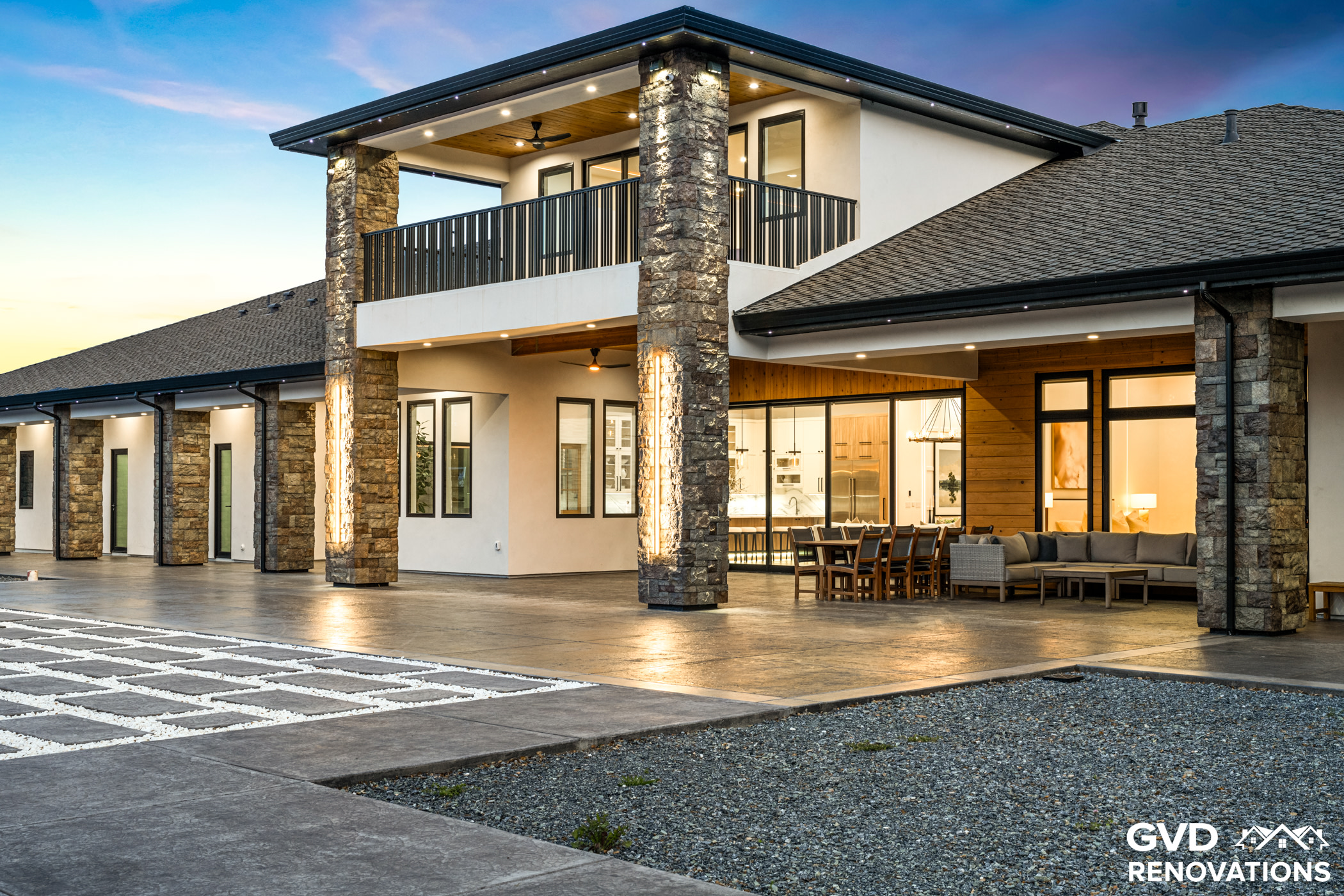
One Contractor to Manage Your Remodel From Start to Finish
Planning a remodel with multiple trades, permits, or structural changes? We manage the scope, sequencing, inspections, and accountability so you don't have to.






From Outdated Home to Dream Home - See It Happen
See real GVD remodels that transform outdated Sacramento homes into beautiful, modern spaces— and yours could be next.
4.9/5 Rating
5/5 Rating
4.6/5 Rating
Free consultation & $1,500 OFF your remodeling project


Sacramento General Contractor
If your project has multiple trades, permits, structural changes, or runs longer than a weekend, you don't need someone to swing hammers. You need someone to run the project. That's what we do.
A general contractor owns the outcome. Specialty trades are excellent at their craft, but on a project involving five or eight or twelve of them in a defined sequence, someone has to schedule, coordinate, inspect, and answer for the result. That's a different job than any single trade does, and it's the job that determines whether a project finishes on time and on budget.
Granite Bay whole-home remodel and kitchen expansion
A multi-phase project that expanded a closed-in kitchen into the surrounding living areas and coordinated framing, plumbing, electrical, drywall, tile, and finish work in a sequence that protected the homeowner's timeline. Permits, engineering review, and seven trade categories handled under one project plan.
Projects like Granite Bay aren't built by a single craftsperson. They're managed. Framing has to be ready when the plumber arrives. Plumbing has to be inspected before drywall. Cabinets land after floors but before the countertop template. If any of those handoffs slips, the project stalls or quality suffers. That choreography is the actual work of a general contractor.
Three Questions That Tell You If You Need a GC
Structural changes, additions, electrical upgrades, plumbing relocations, and most exterior alterations require permits in Sacramento. If yes, you need a licensed GC to pull plans and shepherd the project through inspections.
One trade can run itself. Two can coordinate informally. Three or more need active sequencing: when each one arrives, what they need ready, what they leave behind for the next one.
Longer projects need ongoing accountability: schedule updates, material ordering, change orders documented before any extra work begins, daily site oversight. That's the work most homeowners can't do alongside their actual job.
How We Actually Run a Project
Every contractor uses similar phase labels. What separates one GC from another is what happens inside those phases:
Every line item gets called out separately before any contract is signed. You see exactly what's included, which means change orders are rare and never surprising.
Before demo day, we know which trade arrives in week two and what they need ready. Material lead times are built into the schedule, not absorbed when something runs late.
You don't get a different person each call. The PM is on site, knows where everything stands, and is reachable directly.
Framing off by half an inch is a 20-minute fix before drywall. After drywall, it's a half-day fix. Our PMs walk projects between major trades so problems get caught when they're cheap.
You point out anything that needs attention, we address it before final sign-off. No punch list handed to you to deal with later.
How We Quote Projects
We start with a site walk to measure, photograph, and listen. From there we document the scope: trades, materials, permits, labor, project management. You receive a detailed digital quote you can review at your pace, with every cost category broken out. If something in the scope doesn't match what you wanted, we adjust before the contract, not after construction starts. Change orders during the project are documented with cost and schedule impact before any extra work happens.
Red flags when hiring a GC
- No license number visible or verifiable on CSLB lookup
- Verbal estimates only, no documented scope before deposit
- Deposits over 10% or $1,000 (whichever is less) - the legal limit in California
- No proof of workers' comp or general liability insurance
- Vague answers about who's on site day to day
- Pressure to sign immediately or cash-only payment requests
Looking for a specific service?
This page covers how we run projects. For service-specific details, materials, and pricing, see the pages below:
General Contractor FAQ
What's the difference between a general contractor and a remodeler?
"General contractor" is a California licensing classification (Class B) that authorizes managing projects with multiple trades and structural work. "Remodeler" is descriptive. Most remodeling companies operate under a GC license. GVD holds CSLB #989637 in the General Building Contractor classification.
Do you self-perform or subcontract?
We self-perform most of the work with GVD crews and bring in trusted specialty partners when a project calls for it. Either way, one GVD project manager coordinates every trade, which keeps your schedule reliable.
How much should I expect to pay upfront?
California law caps residential contractor deposits at 10% of the contract price or $1,000, whichever is less. After the deposit, payments are tied to project milestones, never paid in full before work is complete.
How do you handle change orders?
Documented in writing with cost and schedule impact before extra work begins. You sign off, we update the scope, work proceeds. No verbal "while we're in there" upcharges showing up on the final invoice.
Can I see proof of license and insurance before signing?
Yes, and you should ask any contractor for both. CSLB #989637 is verifiable at the California Contractors State License Board website. We carry workers' comp and general liability coverage and can provide certificates on request.




“GVD was top notch all the way! They gave me the personalized attention bigger companies lack, and answered all of my (many) questions clearly. Gary the salesperson sold me on GVD, and everything he said was true! Danielle the designer took my fledgling ideas and made very useful suggestions and improvements. Max, the project manager, gave me regular updates, and the project was completed faster than I expected. The fabricator did a nice job with the stone.Sergei, Bogden, and the many other crew members and contractors showed up on time, and were pleasant, professional and trustworthy. Max explained the charges and payment was easy. Highly recommended.”

“Great pricing. The crew was experienced , kept the job site clean and addressed any issues I had. Would recommend for your future projects!”

“Our kitchen, like our home more generally, dates to the late 1940s. Our cabinets were beginning to fall apart. Our vinyl flooring was at the end of its useful life. The countertops were simply outdated. The layout of the kitchen was neither pleasing to look at nor efficient to use. We did our due diligence, getting visits and quotes from six different construction renovation firms. We chose GVD Renovations based on their first visit, in which they provided us with how the kitchen could be renovated and modernized. I really don't need to say more than we now have our dream kitchen (very lived in with just baked bread on the counter and puppy waiting to go for a treat. We highly recommend GVD. They were great, professionals from start to finish. WOW!”

“We went with GVD for our the kitchen remodel… I was working from home so I kept an eye on the demo... to their credit they actually put up zip-walls to keep the dust out of the living area. The cabinet install is usually where things go south... but I made sure they were intact and in perfect condition upon arrival. - SUGGESTION - Let them handle the material ordering. I tried to source my own sink and it held things up. WARNING - They are a bit pricey. You aren't getting a bargain deal if you go with gvd BUT you also aren't getting a half-finished job. I am satisfied with the work and quality. If you want it done right GVD is a safe bet.”

“Ross G was an amazing project manager. Love the new kitchen design and the custom cabinets. Definitely recommend”

“We had an excellent experience working with GVD. A big thank you to Patrick, Vadim, Greg, Maria, and the entire crew for the outstanding work on our siding, windows, stucco repairs, and painting. The quality of workmanship was excellent, and the entire project was completed efficiently in just a little over two weeks. The team was highly professional, well organized, and communicated clearly throughout the process. The crews were punctual, respectful, and kept the job site clean every day, which we truly appreciated. We are very happy with the final results and impressed by how smoothly everything was executed from start to finish. GVD is a professional, reliable company, and we would definitely recommend them to anyone looking for high-quality exterior renovation work. Highly recommended.”

“GVD Renovations did a phenomenal job fixing all the dry rot at our place. The new siding the fascia and all the soffits look SOOO nice! I would definitely use this company again.”

“I highly recommend this company! Patrick was surprisingly incredibly genuine when he came out to give me an estimate. He was 100% honest with me when he told me that their company wouldn’t be the lowest or the highest in price range, that they would most likely be somewhere in the middle. He brought samples for me to look at along with photos of some recently completed siding projects. The time and attention that Patrick took to spend with me just solidified my decision to go with his company. I wanted to be very thorough so I did get multiple estimates even after meeting with Patrick and honestly, GVD's bid blew all of the others out of the water. Not necessarily in price because he was 100% correct, it was in fact right in the middle of all of the other bids I had received. However, I had been getting more and more anxious about the work I wanted done and the time I wanted it done in but the way Patrick just kind of stopped in and laid everything out for me just put me at ease and even got me excited about it again. Also, Even though all the companies had their name on the estimates, I really liked that Patrick also actually handed me his business card as well, which none of the other company representatives had even bothered to. It just kind of made me trust him even more. I'm not really even sure why, but it was awesome. ANYWHO- I also wanted to mention how incredibly respectful and courteous every single person that was on his crew was during the entire project. It was a huge relief to not have to worry about any issues with them while they were on my property, especially when it comes to any issues with my neighbors, whicih there were no issues there either. My new siding, windows, and gutters look absolutely fantastic! I am 100% ecstatic! Thank you GVD!!!”

“GVD was an awesome company to work with during my kitchen remodel. Most of the workers are employees of GVD so they have a vested interest in customer satisfaction. GVD is also able to control schedules internally which was a huge asset! From the designer, Danielle to the project managers Ross and Ben, every worker was experienced and provided exceptionally skilled work. Excellent quality materials were used. Thank you GVD for my beautiful new kitchen!”

“Gvd’s staff and constructors are knowledgeable and well skilled. I particularly enjoyed working with Eugene during the Constuction.”

“Excellent skilled service throught out the project.”

“GVD did an outstanding job remodeling our guest bathroom! We converted a tub/ shower to shower only, replaced the vanity, toilet and floor. They worked with me because I purchased some of the materials toilet vanity etc. Viktor was my installer and he was great as were the project manager.”

“We were looking for a siding replacement contractor who did dry rot repair. The moment we met Nik, we knew we’d found the right person. From start to finish, GVD handled the entire repair with real professionalism and a steady focus on doing things the right way. We wanted the damaged areas restored properly, not patched, and what they delivered was far better than we expected. I’ll be honest, yes, you can find cheaper quotes out there. But when you’re dealing with the structure of your home and the long term health of the wood, you really do get what you pay for. The work was solid and absolutely worth what we paid. If you want a reliable siding company, GVD is the one.”

“Very responsive, gave me daily updates with photos, happy we found them, beautiful job, would use them again.”

“What stood out to me about GVD is the quality of materials they use. James Hardie siding, Anlin windows, all top-tier products. Easy company to recommend.”
“GVD was top notch all the way! They gave me the personalized attention bigger companies lack, and answered all of my (many) questions clearly. Gary the salesperson sold me on GVD, and everything he said was true! Danielle the designer took my fledgling ideas and made very useful suggestions and improvements. Max, the project manager, gave me regular updates, and the project was completed faster than I expected. The fabricator did a nice job with the stone.Sergei, Bogden, and the many other crew members and contractors showed up on time, and were pleasant, professional and trustworthy. Max explained the charges and payment was easy. Highly recommended.”
“Great pricing. The crew was experienced , kept the job site clean and addressed any issues I had. Would recommend for your future projects!”
“Our kitchen, like our home more generally, dates to the late 1940s. Our cabinets were beginning to fall apart. Our vinyl flooring was at the end of its useful life. The countertops were simply outdated. The layout of the kitchen was neither pleasing to look at nor efficient to use. We did our due diligence, getting visits and quotes from six different construction renovation firms. We chose GVD Renovations based on their first visit, in which they provided us with how the kitchen could be renovated and modernized. I really don't need to say more than we now have our dream kitchen (very lived in with just baked bread on the counter and puppy waiting to go for a treat. We highly recommend GVD. They were great, professionals from start to finish. WOW!”
“We went with GVD for our the kitchen remodel… I was working from home so I kept an eye on the demo... to their credit they actually put up zip-walls to keep the dust out of the living area. The cabinet install is usually where things go south... but I made sure they were intact and in perfect condition upon arrival. - SUGGESTION - Let them handle the material ordering. I tried to source my own sink and it held things up. WARNING - They are a bit pricey. You aren't getting a bargain deal if you go with gvd BUT you also aren't getting a half-finished job. I am satisfied with the work and quality. If you want it done right GVD is a safe bet.”
“Ross G was an amazing project manager. Love the new kitchen design and the custom cabinets. Definitely recommend”
“We had an excellent experience working with GVD. A big thank you to Patrick, Vadim, Greg, Maria, and the entire crew for the outstanding work on our siding, windows, stucco repairs, and painting. The quality of workmanship was excellent, and the entire project was completed efficiently in just a little over two weeks. The team was highly professional, well organized, and communicated clearly throughout the process. The crews were punctual, respectful, and kept the job site clean every day, which we truly appreciated. We are very happy with the final results and impressed by how smoothly everything was executed from start to finish. GVD is a professional, reliable company, and we would definitely recommend them to anyone looking for high-quality exterior renovation work. Highly recommended.”
“GVD Renovations did a phenomenal job fixing all the dry rot at our place. The new siding the fascia and all the soffits look SOOO nice! I would definitely use this company again.”
“I highly recommend this company! Patrick was surprisingly incredibly genuine when he came out to give me an estimate. He was 100% honest with me when he told me that their company wouldn’t be the lowest or the highest in price range, that they would most likely be somewhere in the middle. He brought samples for me to look at along with photos of some recently completed siding projects. The time and attention that Patrick took to spend with me just solidified my decision to go with his company. I wanted to be very thorough so I did get multiple estimates even after meeting with Patrick and honestly, GVD's bid blew all of the others out of the water. Not necessarily in price because he was 100% correct, it was in fact right in the middle of all of the other bids I had received. However, I had been getting more and more anxious about the work I wanted done and the time I wanted it done in but the way Patrick just kind of stopped in and laid everything out for me just put me at ease and even got me excited about it again. Also, Even though all the companies had their name on the estimates, I really liked that Patrick also actually handed me his business card as well, which none of the other company representatives had even bothered to. It just kind of made me trust him even more. I'm not really even sure why, but it was awesome. ANYWHO- I also wanted to mention how incredibly respectful and courteous every single person that was on his crew was during the entire project. It was a huge relief to not have to worry about any issues with them while they were on my property, especially when it comes to any issues with my neighbors, whicih there were no issues there either. My new siding, windows, and gutters look absolutely fantastic! I am 100% ecstatic! Thank you GVD!!!”
“GVD was top notch all the way! They gave me the personalized attention bigger companies lack, and answered all of my (many) questions clearly. Gary the salesperson sold me on GVD, and everything he said was true! Danielle the designer took my fledgling ideas and made very useful suggestions and improvements. Max, the project manager, gave me regular updates, and the project was completed faster than I expected. The fabricator did a nice job with the stone.Sergei, Bogden, and the many other crew members and contractors showed up on time, and were pleasant, professional and trustworthy. Max explained the charges and payment was easy. Highly recommended.”
“Great pricing. The crew was experienced , kept the job site clean and addressed any issues I had. Would recommend for your future projects!”
“Our kitchen, like our home more generally, dates to the late 1940s. Our cabinets were beginning to fall apart. Our vinyl flooring was at the end of its useful life. The countertops were simply outdated. The layout of the kitchen was neither pleasing to look at nor efficient to use. We did our due diligence, getting visits and quotes from six different construction renovation firms. We chose GVD Renovations based on their first visit, in which they provided us with how the kitchen could be renovated and modernized. I really don't need to say more than we now have our dream kitchen (very lived in with just baked bread on the counter and puppy waiting to go for a treat. We highly recommend GVD. They were great, professionals from start to finish. WOW!”
“We went with GVD for our the kitchen remodel… I was working from home so I kept an eye on the demo... to their credit they actually put up zip-walls to keep the dust out of the living area. The cabinet install is usually where things go south... but I made sure they were intact and in perfect condition upon arrival. - SUGGESTION - Let them handle the material ordering. I tried to source my own sink and it held things up. WARNING - They are a bit pricey. You aren't getting a bargain deal if you go with gvd BUT you also aren't getting a half-finished job. I am satisfied with the work and quality. If you want it done right GVD is a safe bet.”
“Ross G was an amazing project manager. Love the new kitchen design and the custom cabinets. Definitely recommend”
“We had an excellent experience working with GVD. A big thank you to Patrick, Vadim, Greg, Maria, and the entire crew for the outstanding work on our siding, windows, stucco repairs, and painting. The quality of workmanship was excellent, and the entire project was completed efficiently in just a little over two weeks. The team was highly professional, well organized, and communicated clearly throughout the process. The crews were punctual, respectful, and kept the job site clean every day, which we truly appreciated. We are very happy with the final results and impressed by how smoothly everything was executed from start to finish. GVD is a professional, reliable company, and we would definitely recommend them to anyone looking for high-quality exterior renovation work. Highly recommended.”
“GVD Renovations did a phenomenal job fixing all the dry rot at our place. The new siding the fascia and all the soffits look SOOO nice! I would definitely use this company again.”
“I highly recommend this company! Patrick was surprisingly incredibly genuine when he came out to give me an estimate. He was 100% honest with me when he told me that their company wouldn’t be the lowest or the highest in price range, that they would most likely be somewhere in the middle. He brought samples for me to look at along with photos of some recently completed siding projects. The time and attention that Patrick took to spend with me just solidified my decision to go with his company. I wanted to be very thorough so I did get multiple estimates even after meeting with Patrick and honestly, GVD's bid blew all of the others out of the water. Not necessarily in price because he was 100% correct, it was in fact right in the middle of all of the other bids I had received. However, I had been getting more and more anxious about the work I wanted done and the time I wanted it done in but the way Patrick just kind of stopped in and laid everything out for me just put me at ease and even got me excited about it again. Also, Even though all the companies had their name on the estimates, I really liked that Patrick also actually handed me his business card as well, which none of the other company representatives had even bothered to. It just kind of made me trust him even more. I'm not really even sure why, but it was awesome. ANYWHO- I also wanted to mention how incredibly respectful and courteous every single person that was on his crew was during the entire project. It was a huge relief to not have to worry about any issues with them while they were on my property, especially when it comes to any issues with my neighbors, whicih there were no issues there either. My new siding, windows, and gutters look absolutely fantastic! I am 100% ecstatic! Thank you GVD!!!”
“GVD was an awesome company to work with during my kitchen remodel. Most of the workers are employees of GVD so they have a vested interest in customer satisfaction. GVD is also able to control schedules internally which was a huge asset! From the designer, Danielle to the project managers Ross and Ben, every worker was experienced and provided exceptionally skilled work. Excellent quality materials were used. Thank you GVD for my beautiful new kitchen!”
“Gvd’s staff and constructors are knowledgeable and well skilled. I particularly enjoyed working with Eugene during the Constuction.”
“Excellent skilled service throught out the project.”
“GVD did an outstanding job remodeling our guest bathroom! We converted a tub/ shower to shower only, replaced the vanity, toilet and floor. They worked with me because I purchased some of the materials toilet vanity etc. Viktor was my installer and he was great as were the project manager.”
“We were looking for a siding replacement contractor who did dry rot repair. The moment we met Nik, we knew we’d found the right person. From start to finish, GVD handled the entire repair with real professionalism and a steady focus on doing things the right way. We wanted the damaged areas restored properly, not patched, and what they delivered was far better than we expected. I’ll be honest, yes, you can find cheaper quotes out there. But when you’re dealing with the structure of your home and the long term health of the wood, you really do get what you pay for. The work was solid and absolutely worth what we paid. If you want a reliable siding company, GVD is the one.”
“Very responsive, gave me daily updates with photos, happy we found them, beautiful job, would use them again.”
“What stood out to me about GVD is the quality of materials they use. James Hardie siding, Anlin windows, all top-tier products. Easy company to recommend.”
“GVD was an awesome company to work with during my kitchen remodel. Most of the workers are employees of GVD so they have a vested interest in customer satisfaction. GVD is also able to control schedules internally which was a huge asset! From the designer, Danielle to the project managers Ross and Ben, every worker was experienced and provided exceptionally skilled work. Excellent quality materials were used. Thank you GVD for my beautiful new kitchen!”
“Gvd’s staff and constructors are knowledgeable and well skilled. I particularly enjoyed working with Eugene during the Constuction.”
“Excellent skilled service throught out the project.”
“GVD did an outstanding job remodeling our guest bathroom! We converted a tub/ shower to shower only, replaced the vanity, toilet and floor. They worked with me because I purchased some of the materials toilet vanity etc. Viktor was my installer and he was great as were the project manager.”
“We were looking for a siding replacement contractor who did dry rot repair. The moment we met Nik, we knew we’d found the right person. From start to finish, GVD handled the entire repair with real professionalism and a steady focus on doing things the right way. We wanted the damaged areas restored properly, not patched, and what they delivered was far better than we expected. I’ll be honest, yes, you can find cheaper quotes out there. But when you’re dealing with the structure of your home and the long term health of the wood, you really do get what you pay for. The work was solid and absolutely worth what we paid. If you want a reliable siding company, GVD is the one.”
“Very responsive, gave me daily updates with photos, happy we found them, beautiful job, would use them again.”
“What stood out to me about GVD is the quality of materials they use. James Hardie siding, Anlin windows, all top-tier products. Easy company to recommend.”
General Contractor Across Northern California
From Sacramento and the foothills out to the Bay Area — pick your city for local project photos, reviews, and pricing.