Siding Contractor in Nevada City
Historic character carries real value in Nevada City, and so does fire code at the wildland edge. GVD pairs Class A fiber cement expertise with free detailed quotes and 3D renderings, so Gold Rush-era homes stay true to form.
Siding Replacement Experts Near You in Nevada City
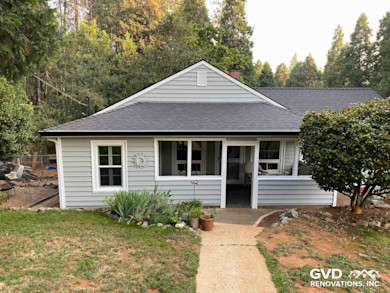
Every project shown here was completed by GVD's crews in and around Nevada City. As a James Hardie Elite and LP SmartSide Master contractor, we back each installation with written warranties and a 4.9/5 rating across 921+ reviews.


Tap images to enlarge
See More Recent Projects →License #989637 | 4.9/5 across 921+ reviews | James Hardie Elite + LP SmartSide Master | 2025 James Hardie Service Excellence Award — the only California contractor to win it
Per the 2025 Remodeling Cost vs. Value Report, fiber cement siding replacement returns about 114% of its cost at resale (around $24,420 in added value), and vinyl about 97%. In a town where historic character and buyer expectations run high, the material a homeowner chooses affects both the sale price and how quickly an appraiser or buyer's inspector signs off. For most Nevada City properties, sitting at the edge of open wildland, that resale question gets decided by fire code before it gets decided by budget.
Get a free detailed quote today: $1,500 off your full siding project, plus a free 3D rendering of your home in your chosen colors and materials.
Siding Before & After Transformations Near Nevada City
A look at real siding replacements GVD has delivered around Nevada City.


What Siding Replacement Costs Here and What It Returns at Resale
Siding cost in Nevada City depends on material, home size, and how many stories and elevations need coverage. Fiber cement runs highest per square foot due to material weight and installation labor; engineered wood costs less and installs faster; insulated vinyl is the lowest-cost option per square foot. GVD provides a free detailed quote with the complete scope and a firm total price before any work begins — no surprise charges once the crew is on site. The 2025 Cost vs. Value Report puts fiber cement siding replacement at roughly a 114% cost recoup at resale — about $24,420 in added home value — with vinyl at about 97%.
Choosing Between Fiber Cement, Engineered Wood, and Vinyl for This Town
Three materials cover nearly every Nevada City project, but wildfire exposure narrows the choice for most homes here.
James Hardie fiber cement carries a Class A fire rating on its own — the most common Class A siding choice GVD installs. It resists warping, rot, hail, and pests, holds color for decades through its factory ColorPlus finish, and lasts 30 to 50 years. It is the heaviest and slowest material to install, and the only one GVD recommends for homes adjacent to open wildland or within a Wildland-Urban Interface zone.
LP SmartSide engineered wood is treated and wax-sealed against moisture, offers a real-wood grain look, and lasts 20 to 30 years. It is lighter and faster to install than fiber cement. It is combustible and does not provide the same fire resistance as fiber cement, so GVD does not recommend it for fire-exposed elevations or lots backing to wildland vegetation. The board itself is combustible, but California's State Fire Marshal lists LP SmartSide for WUI zones when it is installed as part of a qualifying fire-rated assembly — an option GVD offers where code calls for it.
Insulated vinyl costs the least per square foot and suits budget-conscious projects or rental properties. Like engineered wood, it is combustible and does not provide the same fire resistance as fiber cement, making it a fit only for properties with minimal wildfire exposure.
GVD also carries CertainTeed and Prodigy product lines for homeowners who want additional style or budget options within these three material categories.
Why Fire Rating Drives the Material Recommendation Here
Nevada City's wildfire exposure makes fire rating the deciding factor on most projects, so GVD leads with Class A fiber cement, the only siding material offered that meets the top fire-safety rating for homes near open wildland. This is not a marketing preference; it is a direct response to the WUI conditions surrounding much of the city and county. Homeowners on lots bordering timber, brush, or steep foothill terrain should treat fiber cement as the default starting point in any siding conversation, with engineered wood and vinyl reserved for lower-exposure properties.
Full Removal or Overlay: What Decides It Here
GVD offers both approaches. Full removal lets the crew inspect the sheathing underneath for rot or damage, make repairs before new siding goes on, and add a weather-resistive barrier for moisture protection — and it's required when sheathing shows rot, the existing layer is uneven, or code and manufacturer specifications call for it, a frequent finding given the age of Nevada City's housing stock. Where the existing wall is sound, flat, and dry and code and the manufacturer's specs allow it, installing over the old layer is a legitimate, lower-cost option. Either way, GVD installs to manufacturer specifications, which is what keeps material warranties valid, and the recommendation comes from the wall inspection during your free estimate.
Local Climate, Fire Code, and What They Mean for Your Siding
Nevada City sits in a foothill climate zone with real wildfire exposure, which is why Class A fire-rated assemblies matter here in a way they don't in lower-risk areas. Summer heat on south- and west-facing elevations can reach triple digits, and the wide swing between daytime highs and nighttime lows puts ongoing stress on exterior materials through repeated expansion and contraction. Fiber cement's dimensional stability and fire rating address both conditions at once, which is why it's GVD's standard recommendation for this city's more exposed properties.
How the Install Process Works and How Long It Takes
Most Nevada City homes are fully re-sided in one to two weeks. A single-story home around 1,500 square feet can take as little as a few days to a week. Two-story homes, multi-color schemes, and any sheathing repairs found during tear-off extend the timeline. Fiber cement takes longer to cut and hang than vinyl, so material choice affects the schedule too. GVD's in-house crews handle any required permits through the City of Nevada City or Nevada County depending on the property location, protect landscaping throughout the job, clean the site daily, and provide firm start and finish dates in the detailed digital proposal before work begins.
Warranties and Manufacturer Certification Backing Your Project
Every GVD project comes with a written workmanship warranty in addition to the manufacturer's material warranty. As a James Hardie Elite Contractor and LP SmartSide Master Contractor, GVD's certification status is what keeps those manufacturer warranties valid. Contractors without this standing can install the same materials, but their customers risk a voided warranty if installation doesn't meet manufacturer specification.
Why Nevada City Homeowners Choose GVD
GVD is a local, family-owned contractor operating with its own in-house installation crews. The company holds a 4.9 rating across 921+ reviews on Google and GuildQuality, along with an A+ BBB rating. GVD quotes are free, written, and fixed-scope: you see the total price and exactly what's included before you sign anything.
Recently Completed Siding Jobs Near Nevada City
Ready to protect your home and boost resale value? Contact GVD for a free detailed quote, including $1,500 off your full siding project and a free 3D rendering of your home in your chosen materials and colors.
Serviced ZIP Codes: 95959
Try Our 3D Home Design Visualizer!
Ready to explore the possibilities for your home? Snap a photo to get started or spark your imagination with our sample homes.
Start Designing


Elite Certifications: James Hardie & LP® SmartSide
As a James Hardie Elite Contractor and LP® Certified Installer & LP® Master Level Preferred Contractor, we meet the highest standards for installation, service, and customer satisfaction in the industry.
We are fully insured with worker's compensation and general liability insurance to safeguard you and your home during our work.


GAF Certified Roofing Contractor


2025 James Hardie Service Excellence Award


LP Certified Installer Certificate


Angie's List Super Service Award

VSI Certified Installer

Best of Houzz 2020 Service Award


Financing made simple
- Fast application process
- Flexible payment options
- Check eligibility in minutes
Financing is offered through third-party lenders. Approval, rates, and terms depend on credit profile. Not all applicants qualify.
Checking eligibility will not impact your credit score






4.6/5

4.9/5
A+

5/5

5/5

5/5

5/5

4.8/5

5/5
Watch What Some of Our Clients Have to Say
Trusted by Thousands of Homeowners Across Northern California


Siding Contractor Near Nevada City
We bring the same crews, materials, and workmanship to every community around Nevada City.
Frequently Asked Questions
about Siding Installation & Replacement in Nevada City
Is fiber cement required for homes in Nevada City?
Not by blanket mandate, but given the WUI wildfire exposure across much of the city and county, GVD recommends Class A fiber cement for any home near open wildland, brush, or timber. Local fire code review during permitting may also influence the required assembly.
How much does siding replacement cost in Nevada City?
Cost depends on material choice, home size, and number of elevations. Vinyl is lowest per square foot, engineered wood is mid-range, and fiber cement is highest due to material and installation labor. Before any work starts, GVD puts the full scope and a firm total price in a detailed digital proposal — free, and with no obligation.
Will GVD remove my old siding or install over it?
Either, depending on what the inspection shows. If the existing layer is sound, flat, and dry and code and manufacturer specs allow it, installing over it is a legitimate option. GVD removes old siding when sheathing shows rot or moisture damage, the layer is uneven, or code or the manufacturer requires it, which allows repair of the sheathing and proper installation of a weather-resistive barrier.
How long does a siding project take?
Most homes are completed in one to two weeks. A single-story home around 1,500 square feet may take just a few days to a week, while two-story homes, multiple colors, or sheathing repairs add time to the schedule.