Siding Contractor in Colfax
Wildfire readiness now outranks kitchen counters for many foothill buyers, and Colfax siding choices show it at resale. GVD installs Class A fiber cement as a James Hardie Elite contractor, with detailed pricing before any work begins.
Expert Siding Installation Near Colfax
Each of these projects came from a Colfax-area homeowner who wanted the job done once and done right. GVD's crews handled every installation, backed by written warranties and a 4.9/5 rating across 921+ reviews.


Tap images to enlarge
See More Recent Projects →License #989637 | 4.9/5 across 921+ reviews | James Hardie Elite + LP SmartSide Master | 2025 James Hardie Service Excellence Award — the only California contractor to win it
The 2025 Cost vs. Value Report credits fiber cement siding replacement with about a 114% cost recoup at resale — roughly $24,420 in added value — and vinyl with about 97%. For a foothill town where buyers are increasingly asking about wildfire readiness before they ask about kitchen counters, that gap in resale performance tracks directly with the gap in fire protection. GVD Renovations & Remodeling has installed both, and in Colfax the math and the fire code point the same direction.
Get a free quote, $1,500 off your full siding project, and a free 3D rendering of your home in your chosen colors. Ask about current availability.
See the Difference: Recent Siding Work Near Colfax
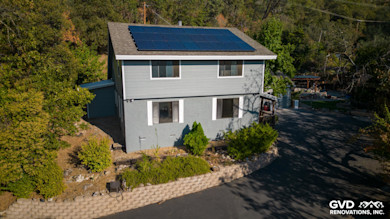
These are actual GVD exterior projects from the Colfax area — see the transformations for yourself.


What Siding Costs in Colfax and What It Returns at Resale
Siding cost scales with square footage, material, and how much of the old wall system needs repair once it's opened up. Fiber cement runs highest per square foot due to material weight and installation labor; engineered wood costs less and installs faster; insulated vinyl is the lowest-cost option per square foot. GVD gives you a free, detailed fixed-price proposal up front, and any change is approved by you in writing before it happens.
On the return side, fiber cement's resale recoup (about 114% of cost) consistently outpaces vinyl (about 97%) in the national data, and in a wildfire-exposed foothill market like Colfax, that premium likely reflects buyer awareness of fire rating as much as curb appeal.
Choosing Between Fiber Cement, Engineered Wood, and Vinyl in a WUI Zone
Colfax sits in a wildland-urban interface area, and that fact changes the material conversation before cost or color ever comes up.
James Hardie fiber cement is the only siding material GVD installs that carries a Class A fire rating. It resists warping, rot, hail, and pests, holds its factory ColorPlus finish for decades, and lasts 30 to 50 years. For homes backing onto open wildland or dense tree cover anywhere near Colfax, this is the material GVD recommends without qualification.
LP SmartSide engineered wood offers a real-wood grain look with wax-sealed moisture protection and a 20 to 30 year lifespan. It is lighter and faster to install than fiber cement, but it is combustible and does not provide the same fire resistance as fiber cement. It's a reasonable fit for interior lots with lower fire exposure, not for parcels adjacent to open wildland. Alone it is combustible; paired with a qualifying fire-rated wall assembly it is CAL FIRE-listed for California WUI zones, and GVD builds those assemblies where code demands it.
Insulated vinyl is the lowest-cost option per square foot, useful for rental properties or tightly budgeted projects. Like engineered wood, it is combustible and does not provide the same fire resistance as fiber cement, so GVD does not recommend it for fire-exposed elevations in Colfax.
GVD carries James Hardie, CertainTeed, Prodigy, and LP product lines and will walk through samples in the design showroom so the fire-rating tradeoffs are visible, not just described.
Removing Old Siding vs. Covering It: The Foothill Calculus
Installing new siding directly over old siding hides whatever moisture or rot is already there, so GVD removes the existing siding whenever sheathing shows rot, the old layer is uneven, or code or the manufacturer's warranty terms call for it — frequent conditions given the temperature swings and moisture cycling common in the foothills. Removal lets the crew inspect the sheathing underneath, repair any rot or damage found, and install a proper weather-resistive barrier before the new material goes on. When the existing wall is sound, flat, and dry and specs allow it, an overlay is a legitimate option that saves labor, and either method installed to manufacturer specifications keeps the warranty valid. GVD makes the call during the free estimate, wall by wall.
Colfax's Fire Code and Climate Demands Built Into Every Install
Colfax's WUI designation means Class A fire-rated assemblies aren't optional for many properties; they're required or strongly advised depending on parcel location relative to wildland. James Hardie fiber cement is the only material in GVD's lineup that meets that Class A standard, which is why it's the lead recommendation for fire-exposed elevations here.
Beyond fire, Colfax summers push exposed, south- and west-facing walls into triple-digit heat, while the diurnal swing between hot days and cool foothill nights puts ongoing stress on siding materials through expansion and contraction. Fiber cement's dimensional stability holds up to that cycling better than vinyl, which can soften and warp in direct summer heat. GVD accounts for sun exposure and elevation orientation when recommending materials for each side of the house, not just the home as a whole.
How the Install Runs, Start to Finish
Most Colfax homes are fully re-sided in one to two weeks. A single-story home around 1,500 square feet can move from a few days to about a week; two-story homes, multi-color schemes, and any sheathing repairs found during removal extend the timeline. Fiber cement takes longer to cut and hang than vinyl due to its density, so GVD builds that into the schedule up front rather than mid-project.
Crews protect landscaping, clean the site daily, and the proposal includes projected start and finish dates before the first panel comes off the house. GVD's in-house crews handle every stage, and GVD handles any required permits through the City of Colfax or Placer County depending on the parcel, so homeowners aren't coordinating that process themselves.
Warranties That Stay Valid Because of How We're Certified
Every GVD siding job comes with a written workmanship warranty plus the manufacturer's material warranty, both documented in writing at project close. As a James Hardie Elite Contractor and LP SmartSide Master Contractor, GVD's installation practices meet the standards those manufacturers require to keep their material warranties intact. Non-certified installers and out-of-spec installation are common reasons material warranties get denied; GVD's certification status and to-spec installation protect against both.
Why Colfax Homeowners Choose GVD
GVD is a local, family-owned contractor, licensed, bonded, and insured under California license #989637, with a 4.9 out of 5 rating across 921+ GuildQuality and Google reviews and an A+ BBB rating. The design showroom carries real material and color samples so Colfax homeowners can see and touch fiber cement, engineered wood, and vinyl side by side before deciding. Every GVD estimate is free, written, and fixed-price, so you know the full scope and the total cost in a detailed digital proposal before any work starts.
GVD Siding Projects in the Colfax Area
Ready to protect your Colfax home with Class A fire-rated siding? Contact GVD for a free quote, $1,500 off your full siding project, and a free 3D rendering of your home in your chosen materials and colors.
Serviced ZIP Codes: 95713
Try Our 3D Home Design Visualizer!
Ready to explore the possibilities for your home? Snap a photo to get started or spark your imagination with our sample homes.
Start Designing


Elite Certifications: James Hardie & LP® SmartSide
As a James Hardie Elite Contractor and LP® Certified Installer & LP® Master Level Preferred Contractor, we meet the highest standards for installation, service, and customer satisfaction in the industry.
We are fully insured with worker's compensation and general liability insurance to safeguard you and your home during our work.


GAF Certified Roofing Contractor


2025 James Hardie Service Excellence Award


LP Certified Installer Certificate


Angie's List Super Service Award

VSI Certified Installer

Best of Houzz 2020 Service Award


Financing made simple
- Fast application process
- Flexible payment options
- Check eligibility in minutes
Financing is offered through third-party lenders. Approval, rates, and terms depend on credit profile. Not all applicants qualify.
Checking eligibility will not impact your credit score





4.6/5

4.9/5
A+

5/5

5/5

5/5

5/5

4.8/5

5/5
Watch What Some of Our Clients Have to Say
Trusted by Thousands of Homeowners Across Northern California


Siding Contractor Near Colfax
We bring the same crews, materials, and workmanship to every community around Colfax.
Frequently Asked Questions
about Siding Installation & Replacement in Colfax
Is vinyl or engineered wood siding allowed on my Colfax property?
It depends on your parcel's location relative to wildland and current fire code requirements. Many Colfax properties in higher-exposure areas require Class A fire-rated materials, which only fiber cement provides among GVD's offerings. GVD reviews your specific site during the estimate to confirm what applies.
Why does GVD recommend fiber cement so strongly for Colfax homes?
Because it's the only material GVD installs that carries a Class A fire rating, and Colfax's wildland-urban interface designation makes that rating a real safety and, often, a code consideration rather than a preference.
Will removing my old siding uncover problems I don't know about?
Possibly. Full removal lets the crew inspect the sheathing for rot or damage that's invisible from the outside, especially relevant given Colfax's temperature swings. Any issues found are repaired before new siding and a weather barrier go on, and you'll be informed before work proceeds.
How long will a full siding replacement take on my home?
Most homes are done in one to two weeks. A single-story home around 1,500 square feet often takes a few days to a week; two-story homes, multiple colors, or sheathing repairs add time. Your proposal will include projected start and finish dates.