Fiber cement siding installed by a James Hardie Elite contractor costs roughly $6 to $12 per square foot, while engineered wood from LP SmartSide runs $7 to $15 per square foot installed (rates as of August 2026).
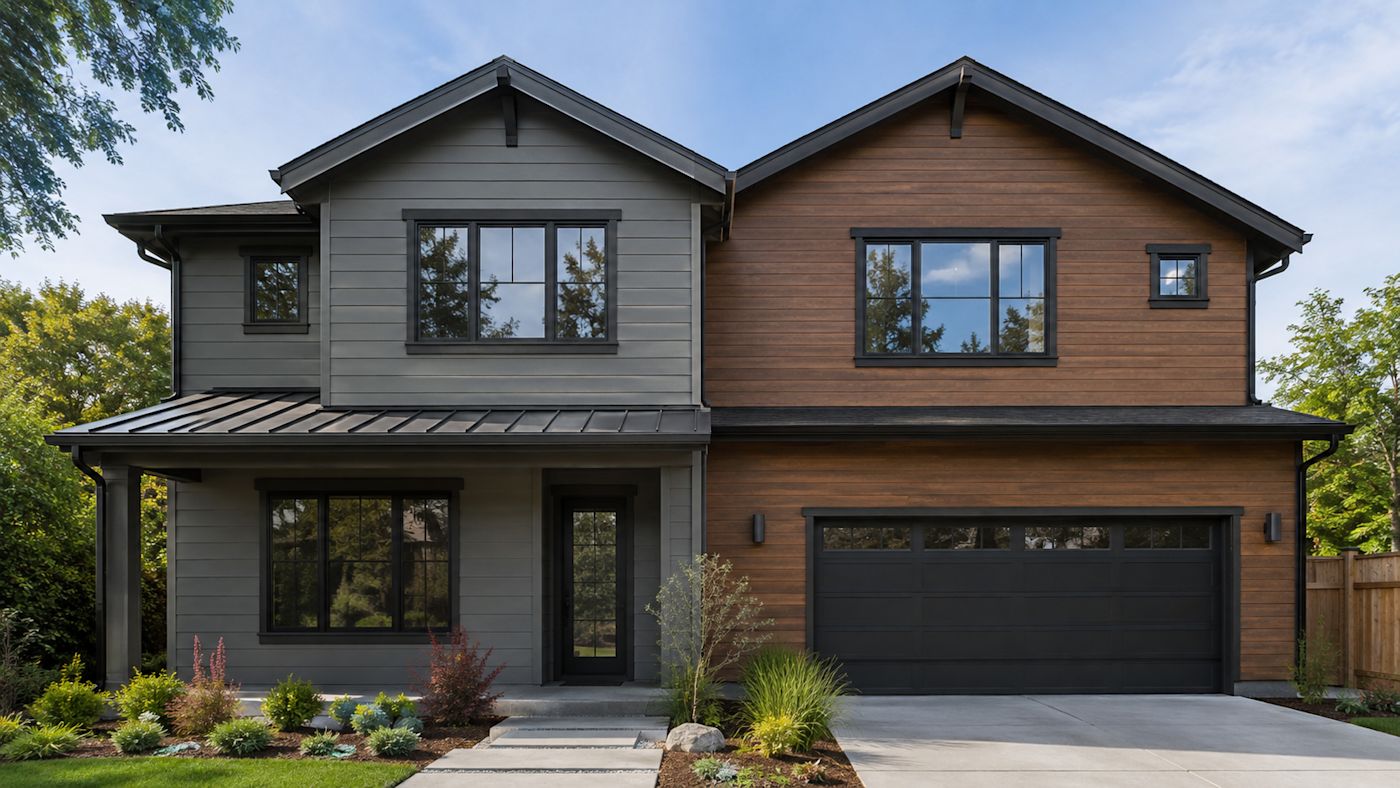
That six-dollar spread on a 2,000 square foot house is the difference between a $12,000 job and a $30,000 one, so the material you pick decides your budget before you even get to color and texture. This guide breaks down what each product is made of, how it performs in Northern California's climate range, what it actually costs by house size, and which one wins for fire zones, resale, and long-term upkeep.
What Fiber Cement and Engineered Wood Are Made Of
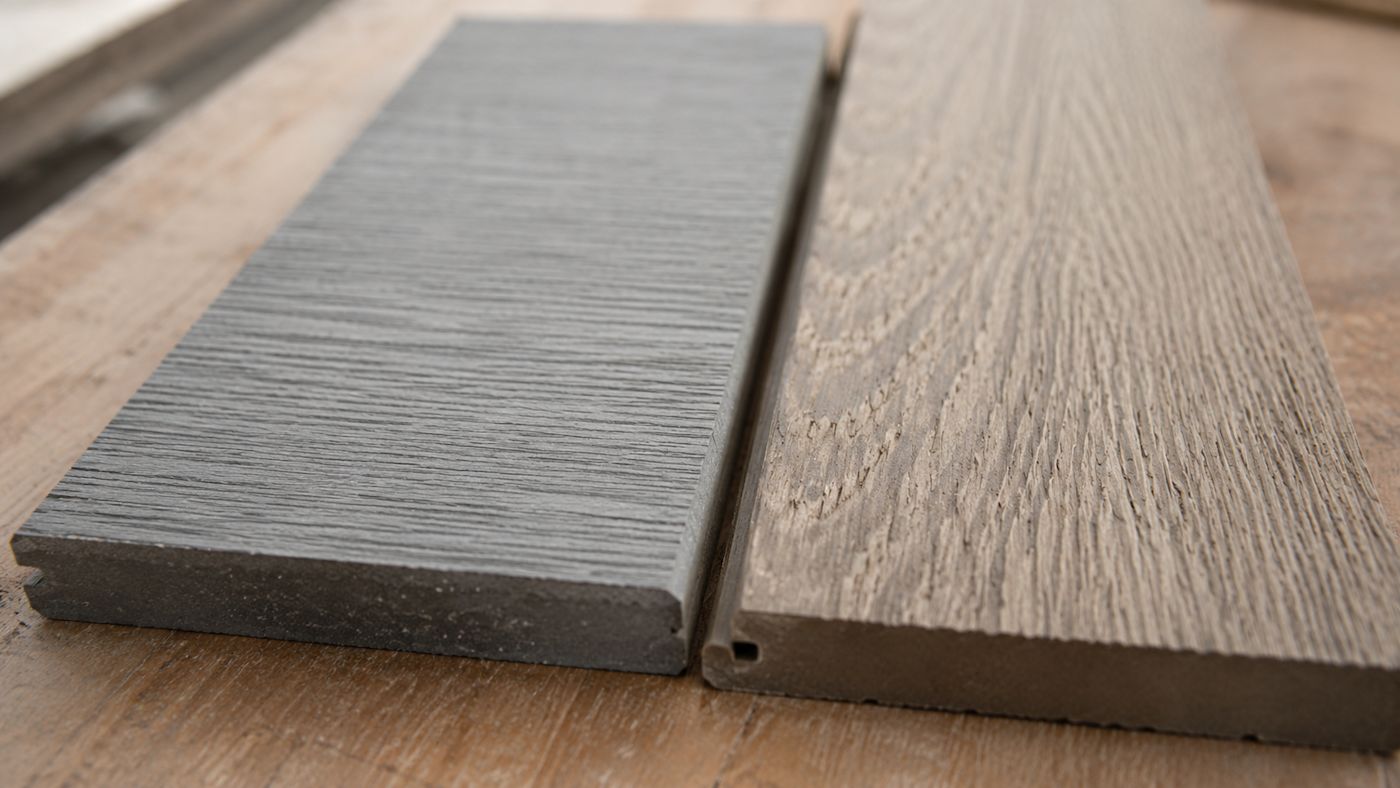
Fiber cement siding is Portland cement, sand, water, and cellulose fiber pressed into a rigid plank. James Hardie's version of this formula resists shrinkage and moisture absorption across climate zones, which is why it holds a flat profile on a wall for decades instead of cupping or bowing. The tradeoff is weight: a 12-foot Hardie plank runs over 30 pounds, so installation crews typically work in pairs.
LP SmartSide starts as wood strands bonded with a zinc borate-infused resin, then finished with LP's proprietary SmartGuard treatment against fungal decay, moisture, and termites. Because it weighs about half what fiber cement weighs, one installer can often handle a plank alone, which speeds up the job and cuts labor hours on a straightforward reside.
Fiber Cement and Engineered Wood in Northern California Heat and Humidity
"Hot" is not one condition, and the two materials fail in different ways under each version of it. Hot, dry exposure like the Sacramento Valley and the foothill wildland-urban interface stresses siding with UV and day-to-night thermal swings. Hot, humid exposure stresses it with sustained moisture that drives rot and mould.
Fiber cement in Sacramento heat
Fiber cement does not crack from triple-digit summer heat when it is installed with the manufacturer's recommended gaps and fasteners. The failures that do show up trace back to installation, not to the material softening or expanding beyond spec. It handles dry and humid exposure equally well, and James Hardie's HZ10 formulation targets humid and coastal conditions specifically.
Engineered wood in Sacramento heat
Engineered wood needs a fully sealed installation in either climate, because any exposed cut edge or fastener penetration gives moisture a path into the wood strands underneath. Sealed properly it holds up, and the margin for error is smaller than fiber cement's.
Termite Resistance: Immune Against Treated
Termites are active across Northern California's inland valleys and foothills, and this is where the two materials diverge sharply. Fiber cement is immune, because it contains no wood fiber for an insect to feed on. LP SmartSide resists termites through its zinc borate treatment rather than through being inedible, so the protection depends on that treatment reaching every cut edge during installation.
Fire Ratings and Wildfire Code Compliance
James Hardie fiber cement carries a Class A fire rating and passes ASTM E136 non-combustibility testing on its own, making it the most common Class A siding choice GVD installs on wildfire-exposed properties in the Sierra Foothills and Sacramento's urban-wildland interface. It is noncombustible under ASTM E136, and Cal Fire's Chapter 7A defensible-space rules in fire-prone jurisdictions often favor it for that reason, though stucco, metal, and masonry assemblies can also reach Class A.
LP SmartSide does not pass ASTM E136 and is combustible on its own, but it is CAL FIRE-listed for California WUI zones when installed as part of a qualifying fire-rated wall assembly, which GVD builds where local code calls for it. That distinction matters for anyone rebuilding after fire or adding onto a home inside a designated wildfire hazard zone: LP SmartSide is not disqualified from those projects, but the wall assembly around it has to meet the standard, not just the plank.
Installed Cost: Price Per Square Foot and Full-House Totals
The table below scales the per-square-foot ranges to the two house sizes homeowners ask about most.
Siding material | Installed cost per sq ft | 1,500 sq ft total | 2,000 sq ft total |
|---|---|---|---|
Fiber cement (James Hardie) | $6 to $12 | $9,000 to $18,000 | $12,000 to $24,000 |
Engineered wood (LP SmartSide) | $7 to $15 | $10,500 to $22,500 | $14,000 to $30,000 |
Fiber cement is cheaper per square foot at both ends of the range and stretches further between repaints, so it is usually the lower lifetime cost as well as the lower upfront one.
HardiePlank and LP SmartSide Warranties and Repaint Cycles Compared
LP SmartSide backs its product with a 50-year limited warranty that includes 5 years of labor coverage, a provision few competitors in either material category match. James Hardie offers a 30-year substrate warranty plus a separate 15-year warranty on its factory-applied ColorPlus finish. The 30-year substrate warranty is non-prorated and transferable to a subsequent owner. Both warranties can be voided by incorrect fastener placement or unsealed cut edges, so the paperwork matters as much as the headline number.
The repaint interval is where the warranty numbers connect to real cost. Fiber cement finished with ColorPlus typically goes 15 to 20 years before it needs repainting, while LP SmartSide tends to need attention every 5 to 10 years depending on sun and moisture exposur . Over a 40-year hold, that gap adds up to one to two extra repaint cycles on the engineered wood side.
Look, Texture, and Finish Options
LP SmartSide reads closer to real cedar because it is built from actual wood strands, and it can be stained as well as painted, which gives it more finishing flexibility than fiber cement. James Hardie's ColorPlus Technology bakes the finish onto each plank in a factory setting rather than relying on field-applied paint, which produces tighter color consistency and better UV fade resistance over the life of the plank; fiber cement itself takes paint but does not take stain, because its cement base does not absorb pigment the way wood fiber does.
Board and batten profiles, deep wood-grain textures, and mixed-material facades (fiber cement panels paired with metal or stone accents) are appearing on new builds and remodels in Sacramento and the Sierra Foothills, replacing the flat lap-siding look that dominated the last two decades.
Installation: DIY, Professional Work, and the Mistakes That Void Warranties
Engineered wood's lighter weight and wood-like cutting behavior make it approachable for an experienced DIYer. Fiber cement is a different job: its weight, the silica dust released when cutting it, and its strict fastener-spacing requirements make professional installation the safer route, and most manufacturer warranties assume a trained crew handled the work.
The installation mistakes that show up most often are specific to each material. On fiber cement, under-driven or over-driven nails and insufficient clearance from the ground or roofline are the recurring problems. On engineered wood, the failure point is almost always an unsealed cut edge or a fastener that punctures the SmartGuard treatment, giving moisture a way into the strand core. Both mistakes can void the manufacturer's warranty even when the rest of the installation is sound.
Reside jobs also raise the overlay-versus-tear-off question. Installing new siding over an existing, sound, flat, dry wall is legitimate and code-permitted in many cases. A full tear-off is typically recommended when the existing wall shows rot, an uneven substrate, or when code or manufacturer specs call for it. GVD inspects the wall during the free estimate and recommends the route that fits what's actually behind the old siding, since overlay itself does not void a warranty, improper installation does, regardless of which method is used.
Resale Value and Insurance Impact
The 2025 Cost vs. Value Report puts fiber cement siding replacement at roughly 114% cost recouped at resale, adding about $24,420 in value against a typical project cost, compared with about 97% for vinyl. Buyers read fiber cement and engineered wood siding as signals of lower future maintenance, which is part of why both outperform vinyl at resale.
Whether fiber cement lowers a homeowner's insurance premium depends on the carrier and the property's wildfire risk designation; some insurers in fire-prone Northern California zones offer mitigation credits for noncombustible cladding, but the discount amount and eligibility should be confirmed directly with your carrier.
Fiber Cement and Engineered Wood Against Vinyl and Stucco
Vinyl and stucco are the two materials most homeowners compare against fiber cement and engineered wood before deciding, so the table below lines up all four on the dimensions that actually change a decision.
Material | Fire performance | Typical lifespan | Pest resistance | Best fit |
|---|---|---|---|---|
Fiber cement (James Hardie) | Class A, noncombustible (ASTM E136) | 30 to 50 years | Immune | Wildfire zones, coastal humidity |
Engineered wood (LP SmartSide) | Combustible, CAL FIRE WUI-listed in a qualifying assembly | 30 to 50 years | Treated (zinc borate) | Faster install, deeper wood texture |
Vinyl | No fire resistance advantage over wood-based products | 20 to 30 years | Immune | Budget-driven projects |
Stucco | Noncombustible | 50+ years | Immune | Desert and hot, dry climates |
Vinyl is the material to avoid in any wildfire-exposed or high-heat inland location, since it lacks the fire resistance of the other three and can soften or warp under sustained high temperatures.
Stucco dominates desert and hot, dry climate homes for the same noncombustible, low-maintenance profile that makes fiber cement the top pick in Sacramento-area wildfire zones.
How to Decide Between Fiber Cement and Engineered Wood?
Choose James Hardie fiber cement when fire resistance, coastal or high-humidity exposure, or the longest realistic repaint cycle top your priority list; it is the highest-rated option on fire performance and long-term maintenance interval among the materials compared here, and it is the only option that passes ASTM E136 outright, which is the test Cal Fire Chapter 7A uses to determine wildfire-zone eligibility. Choose LP SmartSide when installation speed, a deeper wood-grain look, or the longer 50-year warranty with labor coverage matter more to your project than the fire-rating gap.
Both materials beat vinyl on resale value and durability, and the choice between them comes down to which set of tradeoffs fits your house and your climate zone, not which product is objectively better.
GVD Renovations installs both, holding James Hardie Elite status and LP SmartSide Master Level Preferred Contractor status, and our crews walk every wall before recommending overlay or tear-off.
If you're deciding between fiber cement and engineered wood for a home anywhere from Sacramento to the Bay Area or the Sierra Foothills, request a free in-home consultation and a written, fixed-price quote before you commit to either material.
Reviewed by GVD Renovations, a licensed general contractor. Project specifics vary; contact us for a personalized assessment. Prices and product details may have changed since publication. Brand mentions reflect professional opinion, not endorsements.
Reviewed by our team at GVD Renovations, a licensed general contractor. While we strive for accuracy, project specifics vary — contact us for a personalized assessment. Product details, specifications, or warranties may have changed since publication. Brand and product mentions reflect our professional opinion, not endorsements or guarantees.
Tags: siding, fiber cement, engineered wood,
Written by Paul Kho