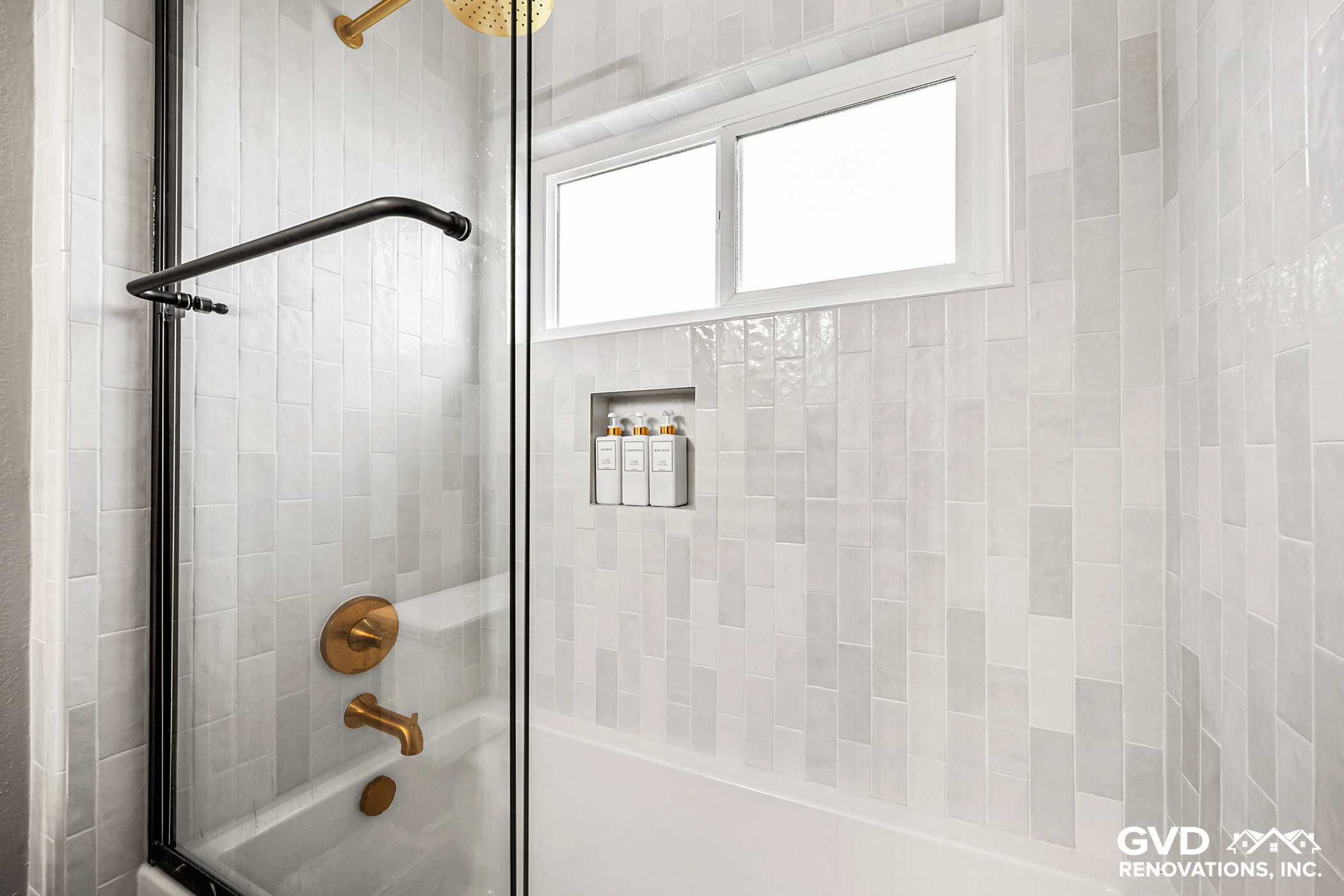
Shower Replacement in Loomis
Acrylic systems, tub-to-shower conversions, and custom tile showers in Loomis, CA — waterproofed and installed right by GVD's own licensed crews.
Loomis Shower Replacement & Installation Experts
Transform your bathroom – faster, easier at a price more affordable than you think. We offer an expansive selection of affordable showers and custom accessories. Professionally installed and ready to use in as little as a few days!


Tap images to enlarge
See More Recent Projects →A Loomis shower replacement, at a glance
GVD handles demolition, waterproofing, and tile as one accountable team. Here is the shape of a typical Loomis shower replacement.
Loomis Bathroom Before & After Gallery
Genuine before-and-after results from recent GVD bathroom projects near Loomis.


Key Takeaways
- A prefabricated acrylic unit is the fastest and least expensive route, and a custom tiled shower is the most involved. Most projects land between those two.
- Substrate damage found mid-demolition is the most common reason a shower timeline slips, since rotted framing or a compromised subfloor has to be repaired first.
- Every GVD quote is fixed-price and delivered as a detailed digital proposal before work starts, so the number approved is the number paid.
- The membrane, pan liner, slope to drain, and pan-to-wall detail decide how long the enclosure lasts, and all four are invisible once the finish goes on.
- A shower replacement leaves the vanity, flooring, toilet, and lighting untouched, which is why it costs a fraction of a full bathroom remodel.
- A barrier-free entry changes the floor slope and drain assembly rather than just the threshold, so it is a decision worth making early.
Shower replacement in Loomis, CA: what to expect
A shower replacement in Loomis means removing an old tub, fiberglass insert, or dated tile enclosure and installing a new pan, walls, and fixtures, whether that is a prefabricated acrylic unit or a rebuilt tile shower, done by a licensed contractor working under Town of Loomis or Placer County's building code. GVD Renovations handles the full scope: design, demolition, plumbing, tile or surround installation, and cleanup, coordinated by one project manager from the first estimate to the final walkthrough.
A shower replacement swaps the enclosure, pan, and valve within the existing footprint, while a bathroom remodel moves fixtures, walls, or plumbing and opens far more of the room. Choosing the smaller scope when the job actually calls for the larger one means demolishing and rebuilding the same wall twice and paying for the disruption twice. We size the scope during the estimate so the work you approve matches the work the bathroom needs.
A shower touches plumbing, waterproofing, tile, and carpentry in a space the size of a closet. Keeping those under one accountable team is what prevents the gaps that show up when trades hand a job back and forth.
Call (916) 269-0761 to book a free in-home consultation and get a detailed fixed-price proposal for your Loomis shower.
How much a shower replacement costs in Loomis
The substrate behind the surround, the framing, backer board, and pan base, is the unknown that moves a shower budget once demolition starts, because it stays hidden until the old enclosure comes off. We assess that wall and pan condition before quoting so the number reflects what is actually there.
Getting the route right at the estimate is what makes a fixed price possible, since the largest uncertainties on a shower job are structural rather than decorative.
Prefabricated acrylic unit, $8,000 to $12,000 installed. The fastest and least expensive route, installed in as little as two to three working days. Best where the existing footprint and drain location stay put.
Walk-in or barrier-free shower, $12,000 to $20,000. A curbless or low-threshold entry, which usually means reworking the pan and the floor slope. The accessibility choice, and the one most often driven by how long the owner intends to stay in the house.
Tub-to-shower conversion, $8,000 to $15,000. Removing a tub and building a shower in the same footprint. Reusing the existing drain location is what keeps this in the lower half of the range.
Custom tiled shower, $13,000 to $25,000 and up. Waterproofing membrane, mortar bed, individual tile setting, and grout curing. Large-format tile, a bench, or a niche push toward the upper end.
Across all four routes, a Loomis shower replacement commonly totals $12,000 to $16,000 depending on material and layout. For the full pricing breakdown by scope, see our main shower replacement page.
Two budget anchors worth holding onto: roughly $5,000 buys a straightforward prefabricated acrylic replacement in the existing footprint, and roughly $10,000 buys a mid-range walk-in or tub-to-shower conversion.
The least expensive route is a prefabricated acrylic unit dropped into an existing, sound footprint with no plumbing relocation, which avoids the labor of moving supply lines or drain rough-in. A stock-size acrylic kit also keeps material cost down, since the panels ship pre-formed and install in a fraction of the hours tile requires.
Acrylic versus tile in a Loomis bathroom
Read the table by the constraint that actually binds for your household, which is usually either the budget or the number of days without a working shower.
| Material | Installed cost | Maintenance | Time out of service |
|---|---|---|---|
| Prefabricated acrylic | $8,000 to $12,000 | Wipe-down; no grout to seal | Two to three working days |
| Tile, standard format | Typically $9,000 and up | Grout sealing on a periodic cycle | About a week |
| Tile, custom or large format | Toward the upper end of the tiled range | Grout sealing on a periodic cycle | Longer than standard tile, for layout and cuts |
Acrylic resists staining and has no grout to maintain, which suits a rental, a fast turnaround, or an owner who wants the bathroom back in service quickly. Tile costs more upfront and needs periodic grout sealing, but it tolerates long-term wear better and contributes more to the value of a full bathroom remodel. Neither choice is affected by outdoor conditions, since a shower enclosure sits inside a conditioned space.
Tub-to-shower conversion versus a full walk-in build
Removing a tub is straightforward. Deciding whether the shower that replaces it stays inside the old footprint is where the cost is determined.
A tub-to-shower conversion removes an existing bathtub and builds a shower in the same footprint, typically reusing the existing drain location and framing, which is what keeps it in the lower half of its range. A full walk-in or barrier-free build goes further: it can expand the footprint, add a bench or niche, lower or remove the threshold, and reroute plumbing where the new layout calls for it.
Where floor area is tight, keeping the existing footprint and drain is usually both the cheaper and the better-looking answer. Where there is room to work, a walk-in build opens up options a conversion cannot.
A barrier-free entry is the option most often chosen for accessibility, and it is worth deciding on early rather than late, because a curbless pan changes the floor slope and the drain assembly rather than just the threshold detail.
Can you replace a shower without removing the tile?
Keeping sound wall tile is a real saving when the conditions allow it, and an expensive mistake when they do not.
A shower pan can sometimes be replaced without removing the surrounding wall tile, provided that tile is sound, the waterproofing behind it is intact, and the new pan matches the existing dimensions and drain location. That keeps the job short and avoids retiling cost.
The tile has to come out when it shows cracking, when moisture has reached the substrate behind it, or when the new pan size or drain position does not match what is already there. GVD inspects the existing tile and substrate during the free estimate before quoting either path, because guessing wrong on this mid-demolition adds cost and days nobody budgeted.
The waterproofing behind the walls
Showers do not usually fail at the surface. They fail behind it, and by the time that becomes visible the damage has been progressing for a while.
A shower is a waterproofing assembly with a decorative surface on it, and nearly every shower that fails early fails at the assembly rather than at the tile or the panel. The membrane, the pan liner, the slope to the drain, and the detail where the pan meets the wall are what decide whether the enclosure lasts, and all four are invisible the moment the finish goes on.
This is the part of a shower replacement worth asking a contractor about specifically, because it is where a low quote is most easily made low, and where the consequences show up as subfloor damage two years later rather than as a visible defect on handover.
Do you need a permit to replace a shower in Loomis?
Whether a shower replacement needs a permit depends on the scope: work that changes plumbing rough-in, moves an electrical fixture, or alters framing typically requires one from Town of Loomis or Placer County, while a straightforward pan or surround swap with no rough-in changes may not.
Skipping a required permit creates real exposure: unpermitted plumbing work can complicate a home sale, trigger a stop-work order if it is discovered later, and in some cases affect manufacturer warranty coverage on the materials installed. When a permit applies, GVD handles the filing with Town of Loomis or Placer County as part of the project scope.
How long a shower replacement takes
Curing time is the variable homeowners underestimate. Tile is not usable the day it is set, and that waiting is part of the schedule rather than an addition to it.
What extends any of these is substrate damage found mid-demolition, since repairing rotted framing or a compromised subfloor adds days a straightforward swap would not need. Permit review can also add time at the front end of a project that changes plumbing.
What a GVD shower replacement includes
The scope of a GVD shower replacement, stated up front so nothing on this list arrives later as a change order:
- Full demolition and haul-away of the old tub, shower, or surround
- Plumbing work, including supply line and drain adjustments where the layout changes
- New shower pan or base installation
- Wall installation, whether acrylic surround panels or tile over a waterproofing membrane
- Fixture installation: shower valve, showerhead, and glass door or curtain rod
- Any required permitting through Town of Loomis or Placer County
- Final cleanup and walkthrough with the project manager
All of it is covered under one fixed-price quote, so the number approved is the number paid with no surprise charges once the crew is on site. Plumbers, tile setters, and carpenters work as one coordinated team from quote to walkthrough.
Shower replacement or a full bathroom remodel?
We quote both, which means there is no reason for us to steer this decision. The scope that fits the bathroom is the one worth doing.
A shower replacement leaves the vanity, flooring, toilet, and lighting untouched, which is exactly why it costs a fraction of a full remodel. If the shower is the only thing that has failed, replacing it alone is the efficient answer. If the vanity is dated, the floor is failing, or the layout does not work, doing the shower on its own means paying twice for the same disruption. Our bathroom remodeling page for Loomis covers the wider scope.
Why Loomis homeowners choose GVD Renovations
You approve a firm total price in a detailed digital proposal before any demolition begins, and on a shower job that detailed total is what protects you when the old enclosure comes off and reveals soft framing or a failed pan. The number you approve is the number you pay, with no surprise charges once the crew is on site. Our own in-house crews handle the demolition, the waterproofing, and the tile, so the person who set the pan is the person accountable when it is tested. When a permit is required, GVD handles the permitting process with the Town of Loomis or Placer County, whichever has jurisdiction over your address. With a median home value of $958,343 here, the finished work has to hold up under scrutiny, and one accountable team from quote to walkthrough keeps that standard in reach.
GVD Renovations holds California contractor license #989637, carries full liability and workers' compensation insurance, and holds an A+ rating with the Better Business Bureau. Every quote is fixed-price and delivered as a detailed digital proposal before work starts, and one project manager owns scheduling and quality checks from the estimate through the final walkthrough.
We have worked through plan review across Placer County and neighboring jurisdictions, so when a permit is required our submittals match what inspectors expect the first time.
Homeowners can see acrylic and tile samples in person at GVD's design showroom in Rocklin, where the design team walks through material options and finishes before the in-home estimate.
Our Rocklin showroom is about 7 miles away.
Recent Bathroom Remodels Near Loomis
Book a free in-home shower consultation in Loomis
Book a free in-home consultation and a GVD project manager will assess the existing shower, confirm whether a permit applies, and put a detailed fixed-price proposal in front of you. Call (916) 269-0761.
Serviced ZIP Codes: 95650, 95765

4.6/5

4.9/5

A+

5/5

5/5

5/5

5/5

4.8/5

5/5
We are fully insured with worker's compensation and general liability insurance to safeguard you and your home during our work.


GAF Certified Roofing Contractor


2025 James Hardie Service Excellence Award


LP Certified Installer Certificate


Angie's List Super Service Award

VSI Certified Installer

Best of Houzz 2020 Service Award


Financing made simple
- Fast application process
- Flexible payment options
- Check eligibility in minutes
Financing is offered through third-party lenders. Approval, rates, and terms depend on credit profile. Not all applicants qualify.

Checking eligibility will not impact your credit score
Watch What Some of Our Clients Have to Say
Trusted by Thousands of Homeowners Across Northern California


Shower Replacement Near Loomis
We bring the same crews, materials, and workmanship to every community around Loomis.
Frequently Asked Questions
about Shower Replacement & Installation in Loomis
How much does a shower replacement cost in Loomis?
Across recent GVD shower projects in the Loomis area, an acrylic shower system runs about $8,000 to $12,000, a tub-to-shower conversion about $8,000 to $15,000, and a custom tile or walk-in build about $15,000 to $25,000. Most shower replacements land around $12,000 to $16,000 depending on materials and layout.
Acrylic or tile — which is better for my shower?
Read the table by the constraint that actually binds for your household, which is usually either the budget or the number of days without a working shower.
Can you replace a shower without removing the tile?
Keeping sound wall tile is a real saving when the conditions allow it, and an expensive mistake when they do not.
Do you need a permit to replace a shower in Loomis?
Whether a shower replacement needs a permit depends on the scope: work that changes plumbing rough-in, moves an electrical fixture, or alters framing typically requires one from Town of Loomis or Placer County, while a straightforward pan or surround swap with no rough-in changes may not.
How long does a shower replacement take?
A prefabricated acrylic shower is usually installed in two to three working days, and a tile shower takes about a week once demolition, waterproofing, tile setting, and grout curing are done. Substrate damage found mid-demolition is what most often adds days.
Should I replace just the shower or do a full bathroom remodel?
We quote both, which means there is no reason for us to steer this decision. The scope that fits the bathroom is the one worth doing.