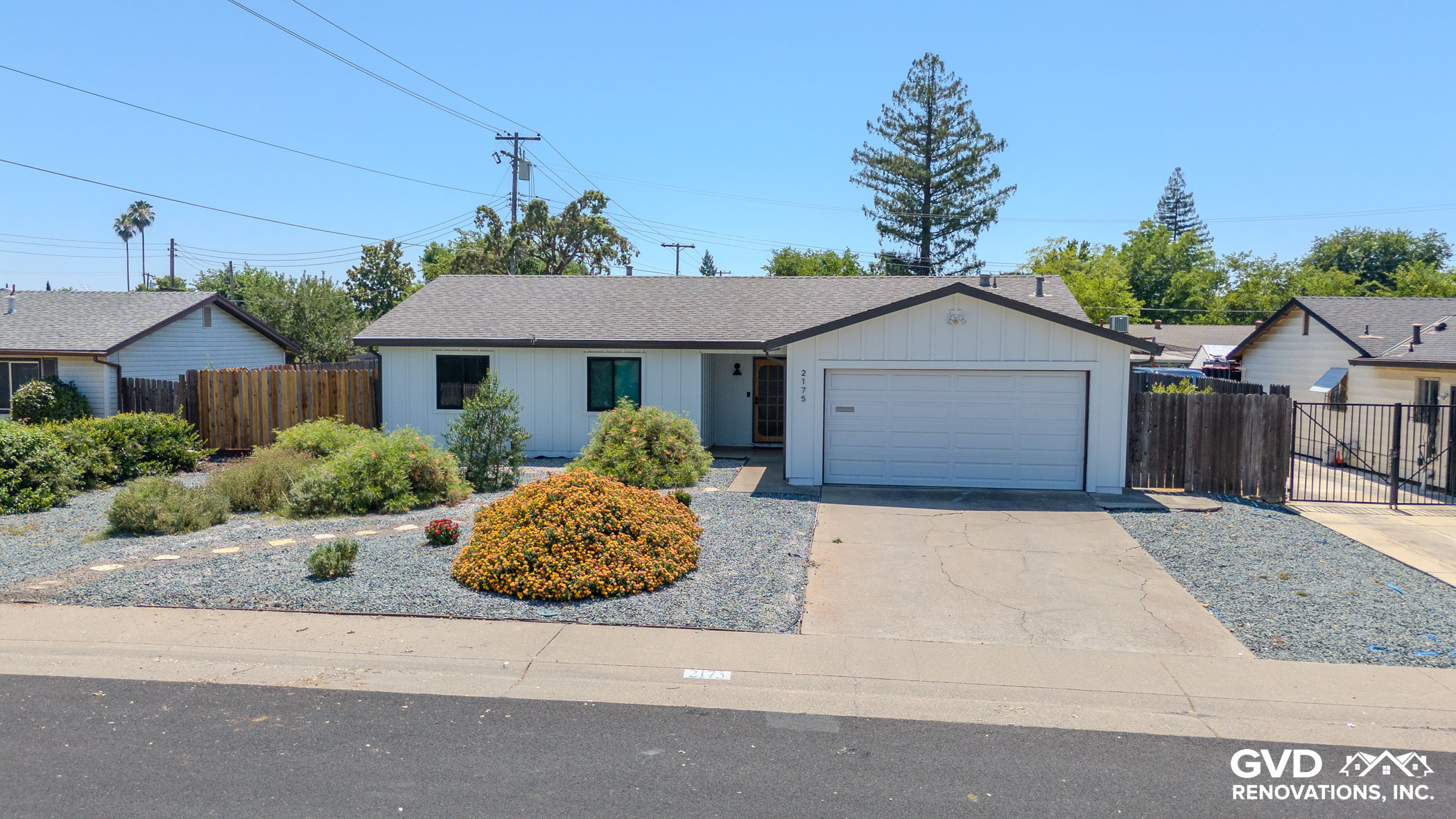
Vinyl Siding Installers in Florin
Upgrade your Florin home with new vinyl siding — set to allow for movement, clean seams, weather barrier first, a detailed fixed-price proposal for the defined scope.
Florin Siding & Window Replacement Experts
Give your home a classic, crisp-looking exterior with exterior siding from GVD Renovations & Remodeling. We have helped countless customers make their dream homes come alive. Let us help you determine the right materials, the best layout, and ideal installation schedule for your renovation.


Tap images to enlarge
See More Recent Projects →A Florin vinyl siding project, at a glance
GVD installs vinyl to allow for movement, laps seams clean, and details the weather barrier first. Here is the shape of a typical Florin vinyl job.
Key Takeaways
- Overlay and full tear-off are both legitimate approaches, and the right one is decided by what the crew finds behind the existing wall.
- Vinyl siding can last 20 to 40 years or more depending on panel grade, installation, and sun exposure, with periodic rinsing as effectively the whole maintenance program.
- Some jurisdictions run a design review or historic preservation process separate from the building permit, which can reach the question of siding material directly.
- Whether a permit applies depends on the scope of work and whether the project reaches the sheathing, not on the siding material chosen.
- Panels hang on the wall rather than fastening tight to it, so they can expand and contract with temperature. A crew that nails too tight causes buckling.
- Vinyl siding is priced against wall square footage rather than floor area, which is why a two-story home carries far more siding than its floor plan suggests.
Vinyl siding installation in Florin, CA: what the job covers
Vinyl siding installation in Florin covers full tear-off and overlay replacement, insulated vinyl upgrades, and repair of cracked or wind-lifted panels, installed by a licensed contractor working under Sacramento County's building code. GVD also installs fiber cement and LP SmartSide, so the material comparison below reflects work we actually do rather than a pitch for the only product on the truck.
Vinyl is the option that puts a full re-side within reach when the budget will not stretch to fiber cement or wood, because the panel cost per square foot runs well below those alternatives. That reach comes with trade-offs: vinyl does not offer the fire rating some other cladding materials carry, and it tends to add less resale value than a higher-grade re-side against a median Florin home value of $422,545. GVD walks you through where vinyl earns its lower price and where it costs you, so the choice is yours to make with the full picture.
We install vinyl, fiber cement, and engineered wood, so the comparison we walk you through is a real assessment rather than a pitch for the only product on the truck.
Call (916) 269-0761 to book a free in-home consultation and get a detailed fixed-price proposal for your Florin home.
How much vinyl siding costs in Florin
The largest swing in a vinyl siding budget is behind the panels: if the sheathing under your old cladding is sound, an overlay is possible, but soft or damaged substrate forces a tear-off with sheathing repair. We check substrate condition at the estimate so the number you approve reflects what your walls actually need, not a guess.
Wall area is why two homes of identical listed size can carry siding quotes thousands of dollars apart, and why an accurate quote requires someone measuring the actual elevations.
Vinyl siding, per square foot of wall area, $12 to $20 per square foot installed. The lowest upfront cost of the common options. Resists rot and needs no repaint cycle. Does not provide the same fire resistance as fiber cement.
Vinyl siding, typical full re-side, $25,000 to $40,000 installed. A whole-home figure for a standard single-story footprint, covering panels, trim, corner posts, and disposal. Wall area rather than floor area drives where a specific home lands in that bracket.
James Hardie fiber cement, for comparison, $11 to $20 per square foot installed. Noncombustible, with a Class A fire rating when tested to ASTM E84, and a common Class A siding choice GVD installs. Significantly less susceptible to moisture-related swelling and decay than wood-based siding products, and recoups more at resale.
For the full pricing breakdown by scope, see our main vinyl siding page.
Larger homes spread the fixed costs of a job, permitting, staging setup, and disposal, across more wall area, so the per-square-foot rate on a big house tends to land slightly below that of a small one even though the total is higher. Trim complexity, the number of window and door openings to flash around, and corner detail move the total independently of panel grade.
What vinyl siding is and how it performs
Both the best and the worst examples of vinyl siding are easy to find, because installation quality varies widely.
Vinyl siding is extruded polyvinyl chloride formed into interlocking panels that hang on the wall rather than fastening tight to it, which lets each panel expand and contract with temperature without buckling. That hanging detail is also why a vinyl install is unforgiving of a crew that nails too tight.
Because the material is not organic, vinyl does not rot and is not a food source for insects, which is its clearest advantage over untreated wood siding. It can still fade and chalk over a long service life, particularly on the elevations taking the most direct sun, and color change tends to show up unevenly between walls with different exposure.
Vinyl is not a water barrier on its own. It sheds most water and relies on the weather-resistive barrier and correct flashing laps behind it to keep the wall assembly dry, which is why the layer nobody sees matters more than the panel everybody does.
Vinyl, fiber cement, and wood compared
| Material | Installed cost per sq ft | Moisture performance | Fire rating | Resale return (2025 Cost vs. Value) |
|---|---|---|---|---|
| Vinyl | $12 to $20 | Resists rot; seams can trap moisture if poorly lapped | Does not provide the same fire resistance as fiber cement | Approx. 97% |
| Fiber cement (James Hardie) | $11 to $20 | Significantly less susceptible to moisture-related swelling and decay than wood-based products | Noncombustible; Class A per ASTM E84 | Approx. 114% ($24,420 added value) |
| Wood | Varies widely by species and grade | Absorbs moisture; needs repainting on a regular cycle | Combustible unless treated | Not separately reported |
Wood is the most sympathetic material on a period home and the most demanding to keep. Vinyl and fiber cement are two different answers to that maintenance problem.
Vinyl versus wood
Vinyl generally costs less to install than wood siding and carries close to zero ongoing maintenance, since it never needs repainting. Wood's upfront price can look competitive on a quote, but the repaint cycle is a recurring cost vinyl does not carry, and that gap widens across a long ownership.
Vinyl versus James Hardie fiber cement
Fiber cement handles moisture better than vinyl and is noncombustible with a Class A fire rating (ASTM E84), where vinyl does not provide the same fire resistance. At resale, fiber cement's roughly 114% recoup outpaces vinyl's roughly 97% on the 2025 benchmark. If that comparison is pointing you toward fiber cement, our siding contractor page for Florin covers that material in depth.
What is the downside to vinyl siding?
Vinyl can crack under a hard impact, fades unevenly when one wall gets significantly more sun than another, and does not provide the same fire resistance as fiber cement. A homeowner in or near a high fire-hazard severity zone, or one optimizing for resale return, should weigh fiber cement instead.
Vinyl siding on an older Florin home
The most common failure on an older home is not the color or the material, it is a panel exposure wider than the original, which changes the proportions of the whole facade.
The right profile depends on what the home already is. GVD measures the existing reveal and trim depth during the free consultation rather than quoting a stock package.
Matching panel profile and trim depth
Flattening happens when an installer runs a standard double-4 vinyl panel over trim built for a narrower wood reveal, which visually shrinks the window and door casings. A competent installer measures the existing reveal first and either matches it in vinyl or recommends a fiber cement profile built to replicate a narrower historic clapboard.
Color and finish
Because vinyl is not normally repainted the way wood siding is, color is a long-term decision, so it deserves more deliberation than a paint color would. There is no repaint to correct it.
Design review and historic districts
A number of California jurisdictions maintain historic districts with their own review process for exterior alterations. That review can reach the siding material itself, which a building permit review generally does not.
Where a design review or historic preservation process applies, it runs separately from the building permit and can reach questions a building permit never touches, including whether a proposed siding material is compatible with the structure's documented character. Confirm whether your property falls inside a designated district before ordering material, because a material rejected at review after delivery is an expensive reversal.
Do you need a permit for vinyl siding in Florin?
A permit may be required when a siding project replaces a substantial share of the exterior or opens up sheathing, though whether one applies to your job is determined by Sacramento County against the specific scope.
Where a permit and inspection apply, that review can put an inspector's eyes on the weather-resistive barrier and flashing before the panels cover them. Siding installed without a required permit can surface during a buyer's inspection or an appraisal and force retroactive permitting at a worse moment.
Overlay versus full tear-off
Overlay adds a layer, which changes how trim, windows, and rooflines meet the new surface. Those details are part of the method decision rather than an afterthought.
New siding can go over an existing wall when the substrate underneath is sound, flat, and dry and both code and the manufacturer's specifications allow it. Overlay is a legitimate approach; where a manufacturer's specifications allow it on a qualifying wall, warranty eligibility depends on the specific product and installation. Full tear-off is the right call, rather than an automatic requirement, when the crew finds rot, an uneven substrate, or damage the manufacturer's install specifications flag as disqualifying for overlay.
Older wall assemblies may be more likely to hide moisture damage behind the original wall than newer construction, which is why GVD inspects the wall during the free estimate before recommending either route. Under either method, improper installation outside the manufacturer's specification is what puts warranty coverage at risk, not the choice between overlay and tear-off.
The weather-resistive barrier under vinyl siding
The barrier is the cheapest component of a siding assembly and the most consequential one, which is an uncomfortable combination on a job quoted competitively.
The barrier's job is to stop water pushed behind the panels from reaching the sheathing, since vinyl is not a sealed surface and depends on the barrier and correct flashing laps to keep the wall assembly dry. The barrier and its flashing laps are what keep the wall dry, so GVD details them carefully rather than treating them as an afterthought.
How long vinyl siding lasts and how to maintain it
Service life on vinyl depends more on panel grade and sun exposure than on how diligently it is maintained, which is unusual among exterior materials.
Vinyl siding can last 20 to 40 years or more depending on panel grade, installation, and sun exposure. The maintenance it needs is straightforward: periodic rinsing to clear surface residue that would otherwise dull the finish. That is the practical extent of it, and it is the reason the material appeals to owners who do not want a repaint cycle.
How to choose a vinyl siding installer in Florin
Most complaints about vinyl siding are really complaints about the crew that installed it, so the questions below are worth more than a price comparison. Check these before signing:
Why Florin homeowners choose GVD Renovations
Three years from now, if a panel cracks or a replacement color no longer matches, you need to reach the same company that did the work. Call a national franchise and the crew that installed your siding has often moved on, because franchises rotate out-of-area crews between markets. GVD is a licensed contractor working in Sacramento County, so the team you call after the sale is the team accountable for it. When a permit is required, GVD handles the permitting process with Sacramento County, so the inspection record stays clean and traceable to your address. Your project runs with our own in-house crews, one coordinated team from the estimate through the final walkthrough, which is the same team you reach if something needs attention later.
GVD Renovations holds California contractor license #989637, carries full liability and workers' compensation insurance, is a James Hardie Elite Contractor and an LP Master Level Preferred Contractor, and won the 2025 James Hardie Service Excellence Award. Carrying more than one siding line is what lets us tell a homeowner when vinyl is the wrong answer for their house.
We have worked through plan review across Sacramento County and neighboring jurisdictions, so when a permit is required our submittals match what inspectors expect the first time.
Every Florin project gets a dedicated project manager who coordinates scheduling, communication, and quality checks from the estimate through final walkthrough, and who handles the permit filing directly with Sacramento County when a permit applies.
Our Rocklin showroom is an easy drive from here.
GVD Siding Projects in the Florin Area
Get a fixed-price vinyl siding quote in Florin
Get a firm price and a date on the calendar. Call (916) 269-0761 to book a free in-home consultation for your Florin home, or request a quote online.
Serviced ZIP Codes: 95829, 95823, 95830
Try Our 3D Home Design Visualizer!
Ready to explore the possibilities for your home? Snap a photo to get started or spark your imagination with our sample homes.
Start Designing


Elite Certifications: James Hardie & LP® SmartSide
As a James Hardie Elite Contractor and LP® Certified Installer & LP® Master Level Preferred Contractor, we meet the highest standards for installation, service, and customer satisfaction in the industry.
We are fully insured with worker's compensation and general liability insurance to safeguard you and your home during our work.


GAF Certified Roofing Contractor


2025 James Hardie Service Excellence Award


LP Certified Installer Certificate


Angie's List Super Service Award

VSI Certified Installer

Best of Houzz 2020 Service Award


Financing made simple
- Fast application process
- Flexible payment options
- Check eligibility in minutes
Financing is offered through third-party lenders. Approval, rates, and terms depend on credit profile. Not all applicants qualify.

Checking eligibility will not impact your credit score






4.6/5

4.9/5

A+

5/5

5/5

5/5

5/5

4.8/5

5/5
Watch What Some of Our Clients Have to Say
Trusted by Thousands of Homeowners Across Northern California


Vinyl Siding Installers Near Florin
We bring the same crews, materials, and workmanship to every community around Florin.
Frequently Asked Questions
about Vinyl Siding in Florin
How much does vinyl siding cost in Florin?
GVD installs premium insulated vinyl systems (Prodigy, CraneBoard, Alside), which run about $12 to $20 per square foot installed. A full single-story re-side in Florin typically runs $25,000 to $40,000 including panels, trim, corner posts, and disposal; small or partial-wall jobs run less. Wall area — not floor area — plus trim complexity and the number of openings to flash around determine where a specific home lands.
Vinyl or James Hardie fiber cement — which should I choose?
Premium insulated vinyl (about $12 to $20 per square foot installed) carries no repaint cycle, but it does not provide the same fire resistance as fiber cement. Fiber cement ($11 to $20) carries a Class A fire rating and recouped about 114% at resale in the 2025 Cost vs. Value Report versus about 97% for vinyl. GVD installs both and quotes them side by side.
What is the downside to vinyl siding?
Vinyl does not provide the same fire resistance as fiber cement, and it can fade or chalk over a long service life, most visibly on the elevations taking the most direct sun. It is also unforgiving of a rushed install — panels nailed too tight will buckle — which is why the crew's fastening and seam detail matters as much as the panel grade.
Do you need a permit for vinyl siding in Florin?
A permit may be required when a siding project replaces a substantial share of the exterior or opens up sheathing, though whether one applies to your job is determined by Sacramento County against the specific scope.
Overlay or full tear-off — which is right for vinyl?
Overlay adds a layer, which changes how trim, windows, and rooflines meet the new surface. Those details are part of the method decision rather than an afterthought.
How long does vinyl siding last, and how much maintenance does it need?
Service life on vinyl depends more on panel grade and sun exposure than on how diligently it is maintained, which is unusual among exterior materials.